

Where have the whip-poor-wills gone?
The beloved night birds have been in decline for decades. A researcher in the basin is on the hunt to find out why.
The beloved night birds have been in decline for decades. A researcher in the basin is on the hunt to find out why.
A cartographer is leading a basin-wide project that aims to put Indigenous knowledge of the Mississippi River on the map.

A unique human-mollusk partnership at the Minneapolis Public Works water treatment plant provides early alerts on pollution.

The beloved night birds have been in decline for decades. A researcher in the basin is on the hunt to find out why.

COLUMBIA, Mo. — In Missouri, summer nights are defined by muggy, humid heat, the deep croaking of bullfrogs and the flickering glow of lightning bugs. The distinctive, melodic call of the whip-poor-will, a native bird species, used to be a central part of that chorus.
Now, the absence of the birds’ song on summer nights is telling. The population of what used to be a common summer resident in the eastern United States has sharply declined.
“Whip-poor-wills are a native species,” said Kristen Heath-Acre, state ornithologist for the Missouri Department of Conservation. “I get a lot of phone calls from people asking why they don’t hear whip-poor-wills anymore, so they’re very important to people, and we want to protect them.”
Eastern whip-poor-wills are nocturnal birds in the nightjar family and can be spotted throughout Missouri and the Mississippi River Basin between April and September. They migrate south to Mexico and Central America for the winter.
But whip-poor-wills have been steadily declining by an estimated rate of 2.5% per year since the 1970s, according to Holly Coates, a PhD student at the University of Illinois Urbana-Champaign. Possible causes include habitat loss and decreasing insect availability.
This rate differs by state. Coates said the population decline rate is around 5% per year in Illinois. According to the United States Geological Survey, Missouri’s population of whip-poor-wills is declining at a rate of 2.11%.
That population decline is a research focus for Natalie Ramos, a doctoral student studying natural resources with an emphasis in forestry at the University of Missouri. She is interested in studying forest-dwelling nightjars, particularly whip-poor-wills and chuck-will’s-widows.
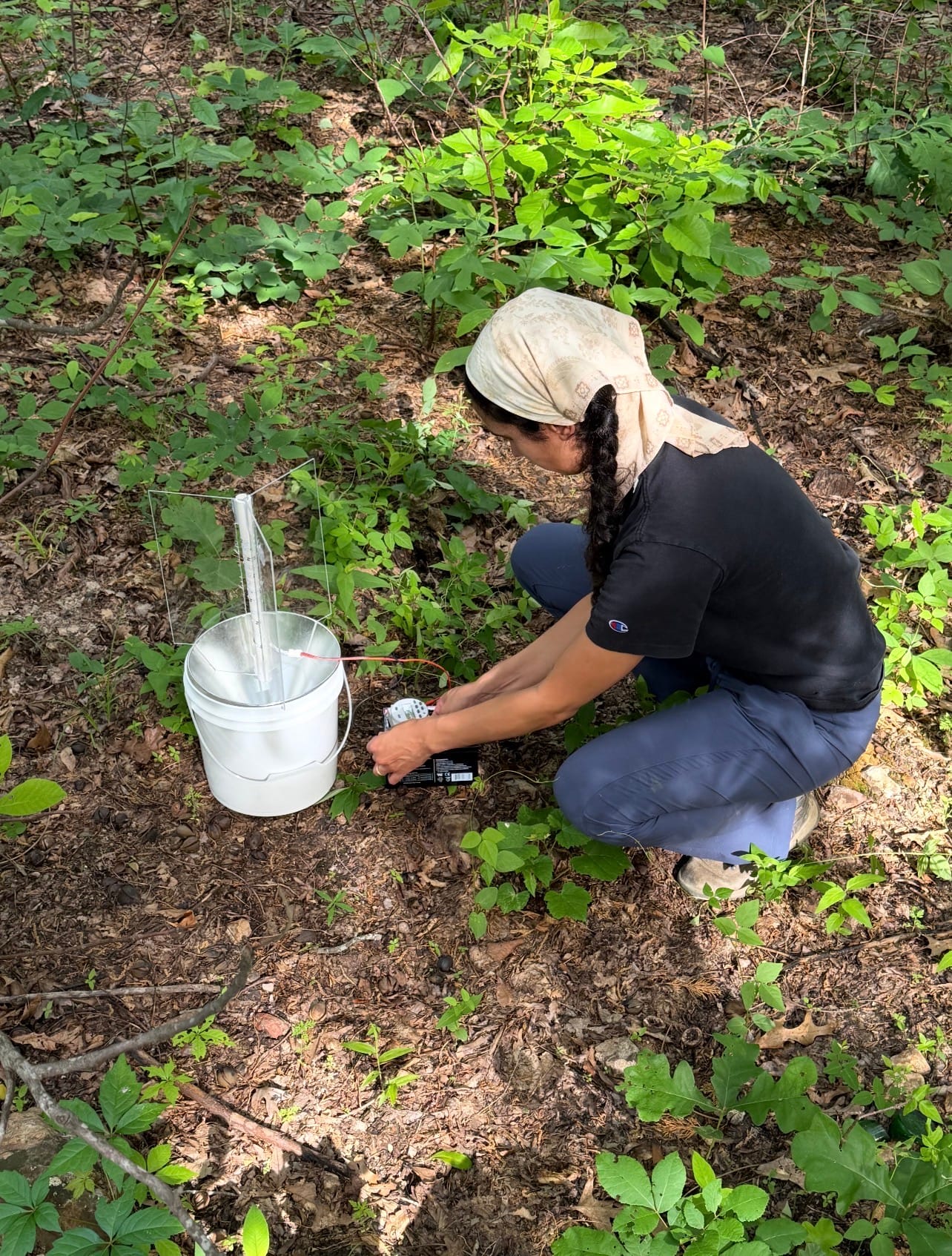
Ramos became fascinated by nightjars during her undergraduate program at the University of Georgia.
“I love just like the whole charisma, the whole personality of the bird,” Ramos said, explaining that her first experience with nightjars was during an internship on a barrier island off the coast of Georgia called Little St. Simons.
“I started with chuck-will’s-widows and wanted to stick with nocturnal birds,” Ramos said. “I really love nightjars. They’re kind of these really secretive, cryptic birds.”
Ramos hopes to get landowners and others invested in protecting the birds.
“The way to get people more into animals and conservation in general is to tie it to their childhood or tie it to some kind of nostalgia,” Ramos said. “I feel like whip-poor-wills are a really good tool for that.”
As part of a four-year whip-poor-will occupancy study, Ramos has spent two summers surveying their habitats and prey availability to understand why the population is shrinking.
The study surveyed eight sites that were deemed priority geographies — key landscapes around the state where the Department of Conservation collaborates with private landowners to improve natural ecosystems. These sites encompass a gradient of forest management types, including even- and uneven-aged cuts, thinning and burning, clearcuts and group selection.
“We’re trying to understand how the presence or absence of whip-poor-wills is associated with how we’re managing for that landscape or not managing for the landscape,” Heath-Acre said.
Whip-poor-wills are most active between the first- and third-quarter moon phases. This encompasses about a two-week time frame. Ramos explained that while the birds are often active and vocal during all moon phases, their activity increases when nights are brightly lit.
“They really are keyed into the moonlight, so like how much light there is, and we think it’s because that increases their visibility, so they can see their prey easier,” Ramos said.
Whip-poor-wills fly around with their mouths open and use the stiff, hair-like feathers around their beaks, called rictal bristles, to help them scoop up insects.
Within that time frame, the moon must be above the horizon for whip-poor-wills to be active, which restricts the period of time that Ramos can survey.
Because the restrictive time window is at night, automatic recording units are used to passively monitor the birds to avoid safety risks for researchers. The AudioMoth automated recording units are programmed to record for two hours every night between the first- and third-quarter moon, giving Ramos about 28 hours of audio to analyze from every two-week survey window.
“Most people know the whip-poor-will song,” Heath-Acre said. “It’s very loud. It’s easily detectable by these recording units. And so we’re using that as a way to kind of expand our ability to listen for whip-poor-wills and detect them.”
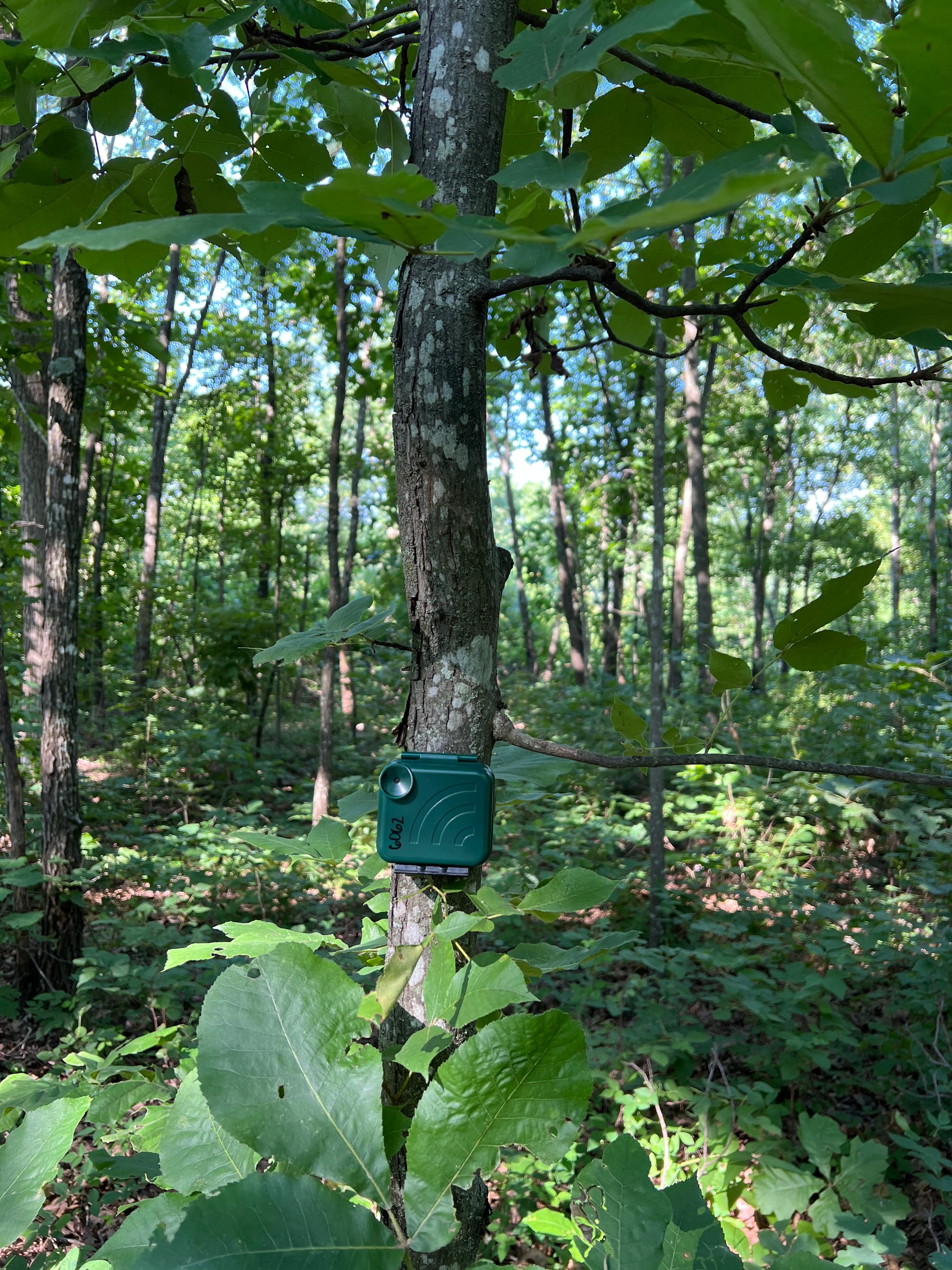
By the end of the study in 2027, Ramos will have completed three field seasons. The automated recording units were deployed for three survey windows during the first season, which was during the summer of 2025. This past summer, a new component of insect sampling was added to the study.
“We’re seeing like this crazy decline in insects, and that’s what we theorize is leading to the decline of nightjars, like whip-poor-wills and chuck-will’s-widows,” Ramos said.
Whip-poor-wills eat mostly moths and beetles. To catch the insects, Ramos set up black light bucket traps in the same sites where the automated recording units were set up to track whip-poor-will calls. With this setup, Ramos can observe how insect populations influence whip-poor-will occupancy at these sites.
Ramos explained that while habitat management practices might not affect the birds’ population month-to-month, the availability of prey might.
In the upcoming field season, Ramos will add another dimension to the survey: fecal samples. These samples will show Ramos exactly what the whip-poor-wills are eating.
Getting fecal samples is tricky, though. Ramos will set up a handmade bird decoy and put a speaker nearby playing the call to attract the whip-poor-wills. Because the birds are territorial, they will dive-bomb the fake bird upon arriving at the site. From there, she will trap the bird and collect fecal samples to get a clearer picture of their diet. This will be the last component of the study.
“So now I know where they are, what’s available, and of what’s available, what they’re actually eating,” Ramos said.
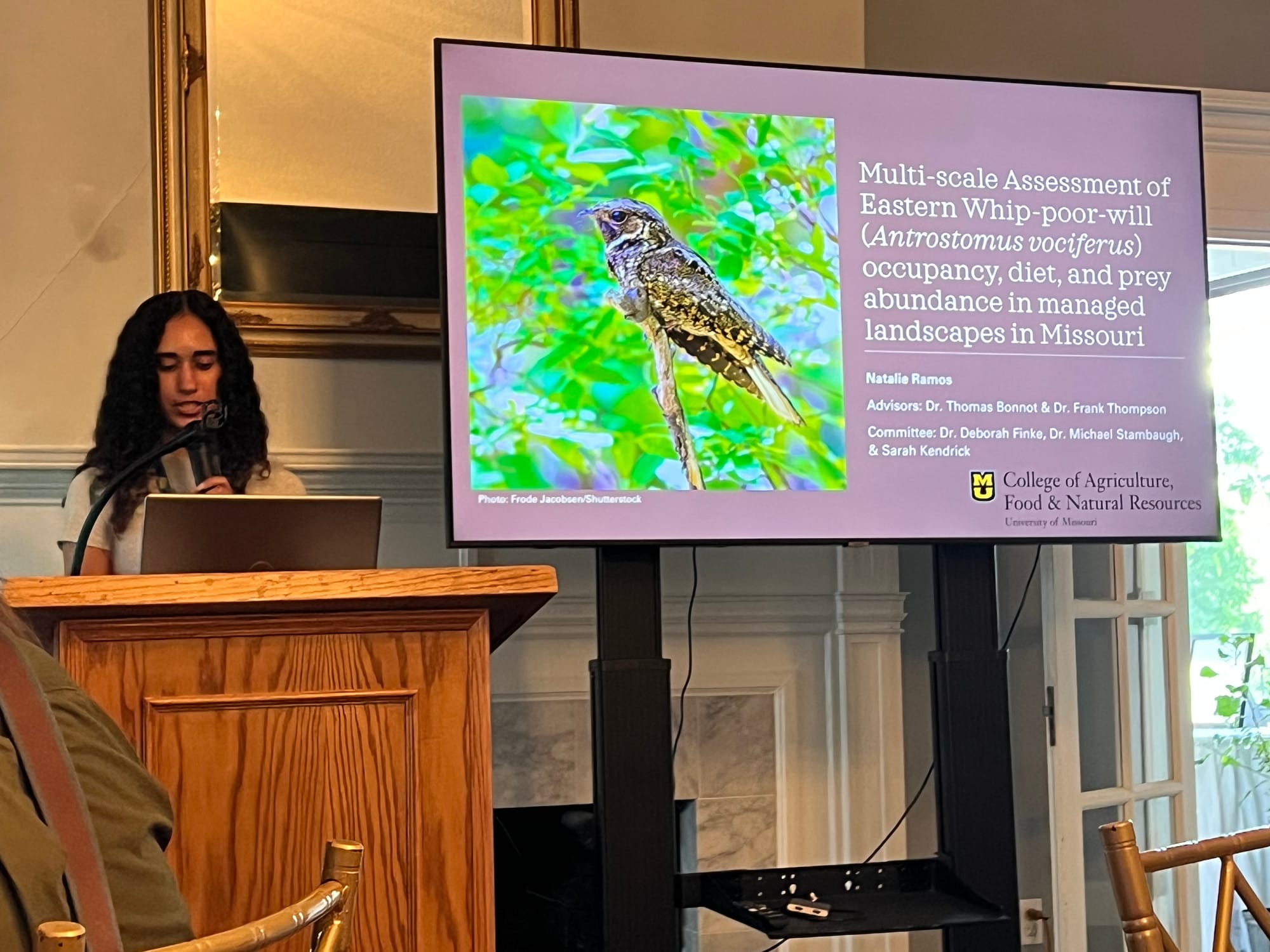
During the academic year, Ramos will analyze the data and document her study’s findings in a scientific paper. At the end of the study, Ramos will send her data, along with her analysis and recommended conservation actions, to the Missouri Department of Conservation.
“MDC will take that information and the recommendations to make work plans for the regions,” Heath-Acre said.
While the culturally significant whip-poor-wills have been dwindling, researchers like Ramos are working to understand more about their decline and ways to mitigate it.
“There’s a lot of really amazing work being done on how we can help bring back their populations,” said Jared Del Rosso, author of an imminent book on the species. “Hearing a bird call when you don’t get the opportunity to hear it very often, I can’t help but feel inspired by the persistence with which they sing.”
Beyond being native to North America, whip-poor-wills hold a distinctive place in regional folklore with their rhythmic, lilting whistle, reminiscent of home for many Midwesterners.
“The first whip-poor-will’s song was really important to people,” Del Rosso said. “It was interpreted as a sign that the last frost had passed, which is really important if you farm.”
Del Rosso started birding in 2012, but he became curious about whip-poor-wills more recently after diving more deeply into their rich history. He said that whip-poor-wills have been associated with a wide array of emotions, such as grief, sadness, loneliness, happiness and nostalgia.
“Owls are really culturally important,” Del Rosso said. “Bald eagles, of course, are really culturally important. But there’s such a variety of responses to whip-poor-wills.”
Few people are as acquainted with the nostalgia of the whip-poor-will as Danny Marshall.
Marshall, 77, has been around wildlife since he moved out of St. Louis in 1961. After graduating from Missouri State University in 1971, known as Southwest Missouri State at the time, he started working for the Department of Conservation. He was an assistant hatchery manager at Indian Trail Fish Hatchery in Dent County.
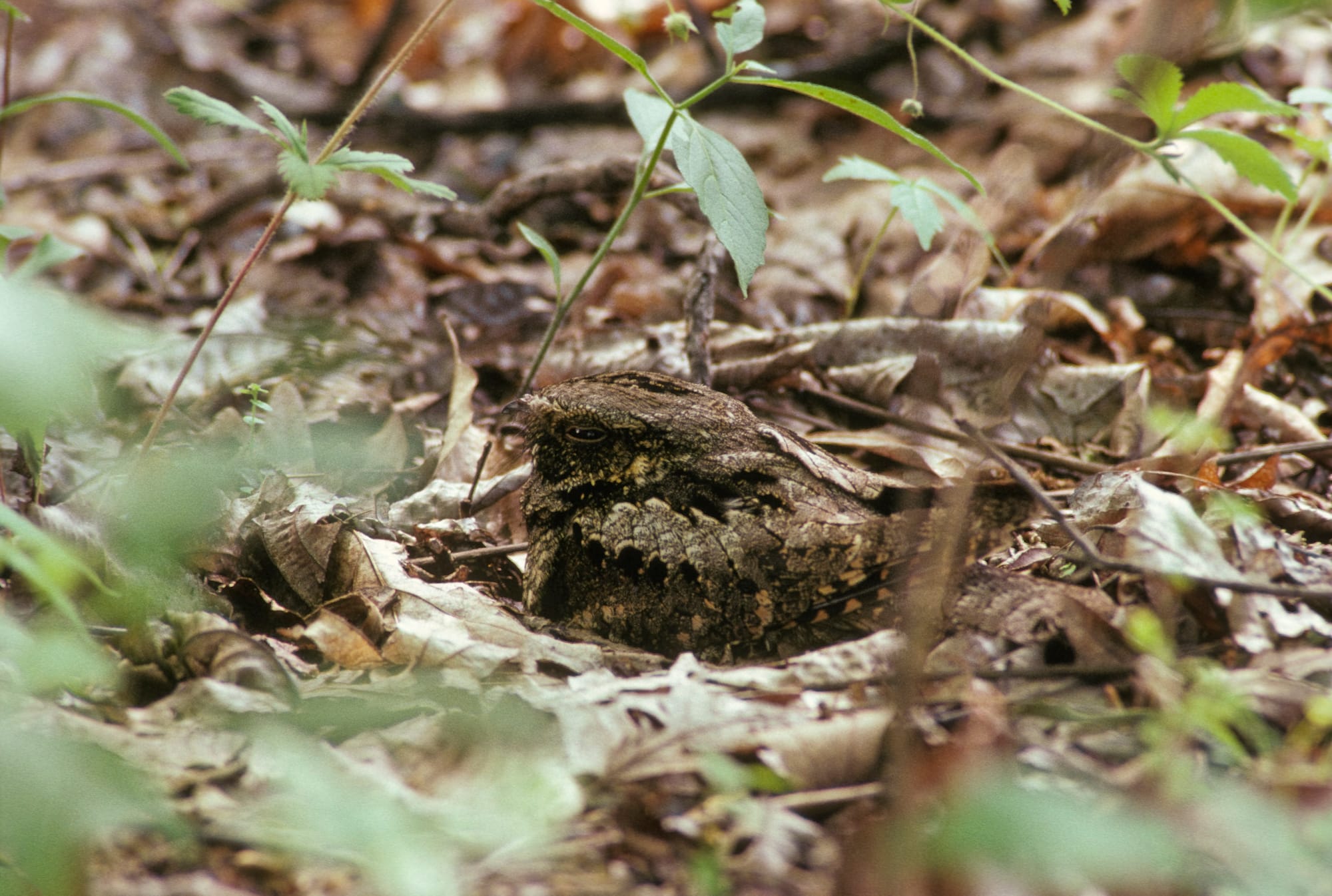
“While I was there, there were hundreds and hundreds of whip-poor-wills,” Marshall said. “You would have to be careful going down the county road because they would be sitting in the road.”
Marshall remembers a time when whip-poor-wills were abundant enough to keep you awake during the night. One time, when his mother-in-law and father-in-law came to visit from Springfield, they stayed in a camper right outside his house.
“The next morning they came in, and I asked them how they slept, and my mother-in-law said it was terrible,” Marshall said. “She said, ‘Those things sang all night long; I couldn’t get to sleep.’”
Marshall now lives about an hour to the north in Crawford County, where he’s been for the past 36 years. Marshall still goes back to the Indian Trail State Conservation Area in Dent County occasionally to fish with his son. He said hearing a whip-poor-will has become a rarity.
“If we hear a whip-poor-will, it’s really pretty neat,” Marshall said. “There’s not near as many as there were.”

A cartographer is leading a basin-wide project that aims to put Indigenous knowledge of the Mississippi River on the map.

Two artists have built over 400 temporary glass sculptures in the basin, highlighting hidden connections between its rivers and streams.


In a tense meeting, SpaceX managers told locals the massive spaceport won’t affect them at all. Then locals pressed for specifics.


A support group and a lab in the St. Louis area provide resources for people with the allergy to mammal products — and evidence that its effects can be reversed.

Environment and agriculture news from across the Mississippi River Basin — delivered straight to your inbox.