

Researchers, patients optimistic in fight against alpha-gal syndrome
A support group and a lab in the St. Louis area provide resources for people with the allergy to mammal products — and evidence that its effects can be reversed.
A support group and a lab in the St. Louis area provide resources for people with the allergy to mammal products — and evidence that its effects can be reversed.

The Gulf’s Flower Garden Banks has been viewed as healthy, but a new study shows signs of damage.

More than three-quarters of member cities in a Mississippi River coalition have been approached to host AI infrastructure.


Take a tiny survey (now with working link!) to help improve this newsletter. Thanks!
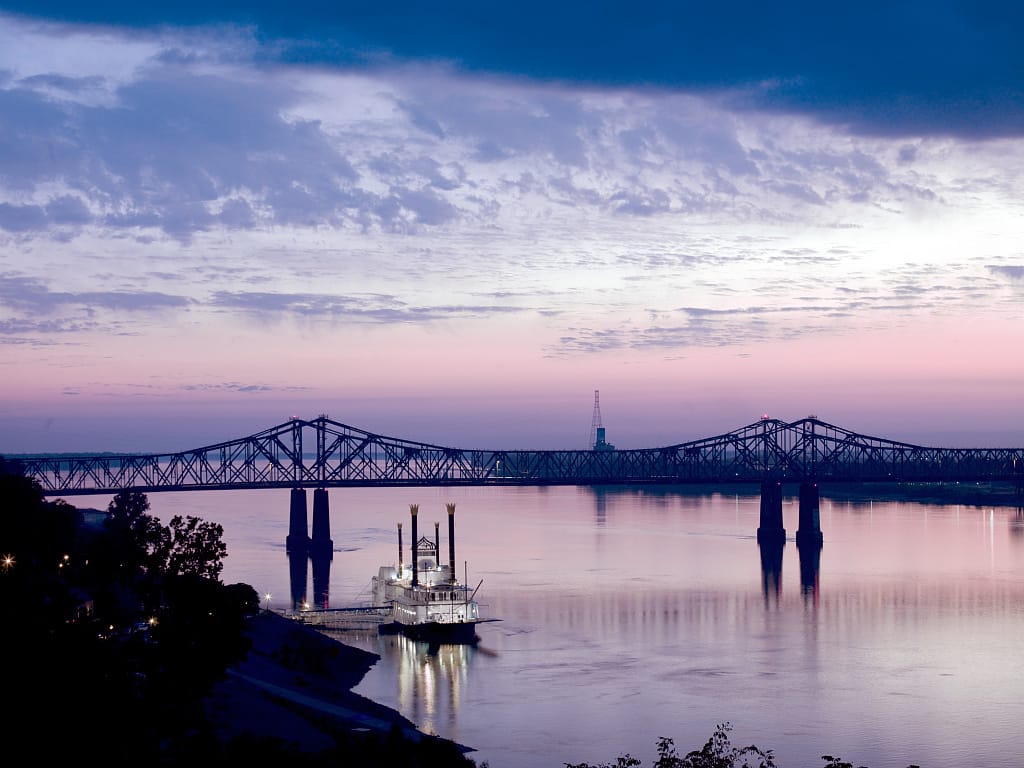
The Mississippi River basin lacks the collective governance structure seen in watersheds such as the Great Lakes. We wrote about this contrast in one of our very first stories back in 2022 and have reported on developments ever since.
At the Society of Environmental Journalists annual conference in Philadelphia earlier this month, we held a workshop that brought together experts from the Mississippi, Colorado, Chesapeake and Delaware watersheds to compare the successes and limitations of their basins’ system-wide management approaches — or lack thereof.
Panelists talked about the challenge of gauging collaborative success in the midst of the transformative effects of climate change, and the need for inclusive advocacy that centers people and communities as much as or more than plants and animals.
Our editorial director Tegan Wendland asked Kelly McGinnis, the executive director of the Mississippi River Network, what she thought of these perspectives from more collectively managed watersheds. McGinnis said in a broad sense, she was envious.
“We need to manage the Mississippi River as a system and not in this fragmented way,” McGinnis said. “We need to manage the Mississippi River as an ecosystem that provides a benefits outside of navigation and trafficking goods and services.
“But am I envious, particularly, of any of these models? I am not sure, because there's a lot of problems with every model,” she continued. “I think in one way, the river can learn from the Colorado, from the Delaware, from the Great Lakes, where they have had missteps, and try to prevent that from happening when we ever get to a holistic governance structure.”
Our work seeks to show audiences up- and downstream in this vast basin how they are part of a shared ecosystem. Look for more of what we’ve learned about watershed-wide management schemes in upcoming stories on farm runoff and more.
Thanks for reading,
Annie Ropeik
Ag & Water Desk assistant director
Disclosure: The Ag & Water Desk receives major funding from the Walton Family Foundation, which also funds the Mississippi River Network. The Desk is editorially independent and maintains financial transparency.
PFAS rules: Our reporters are covering the local implications of new, long-awaited federal limits on “forever chemicals” in drinking water. Read more from The Daily Memphian, the Star Tribune in Minneapolis and The Gazette in Cedar Rapids, Iowa.
Fertilizer trends: The latest federal Ag Census showed fewer farms used manure as fertilizer in the Midwest, writes Mónica Cordero of Investigate Midwest.
Family farms: Kentucky is losing family farms and farmland at a rapid clip. Connor Giffin reports on the cost of this trend for the Louisville Courier Journal.
Memphis development: The Memphian’s Keely Brewer is covering a contentious “tree upcycling” project proposed for a neighborhood weary of industrial development.
Want to see more Ag & Water Desk journalism in your local news outlet? Our stories are free to republish and localize. Reply to this email with outlets you think we should meet, or tell your local editor to fill out this form for access and story alerts. Thanks!


Desk reporters dig deep into pollution, drought and AI


The Desk's editorial director reflects on the importance of observing nature

Reflections on our assistant editorial director's first month on the job.

Environment and agriculture news from across the Mississippi River Basin — delivered straight to your inbox.