

Inside the federal push for a $6 billion data center
A shift in wetlands policy has accelerated a project in central Arkansas. The case shows how the balance has tilted since a landmark Supreme Court ruling.
A shift in wetlands policy has accelerated a project in central Arkansas. The case shows how the balance has tilted since a landmark Supreme Court ruling.

Since its arrival in around 2002, the emerald ash borer has swept across the Midwest and East Coast. Indigenous artists who rely on ash are adapting.

Farm groups help aging farmers pass the baton by offering financial — and practical — advice.

A shift in wetlands policy has accelerated a project in central Arkansas. The case shows how the balance has tilted since a landmark Supreme Court ruling.

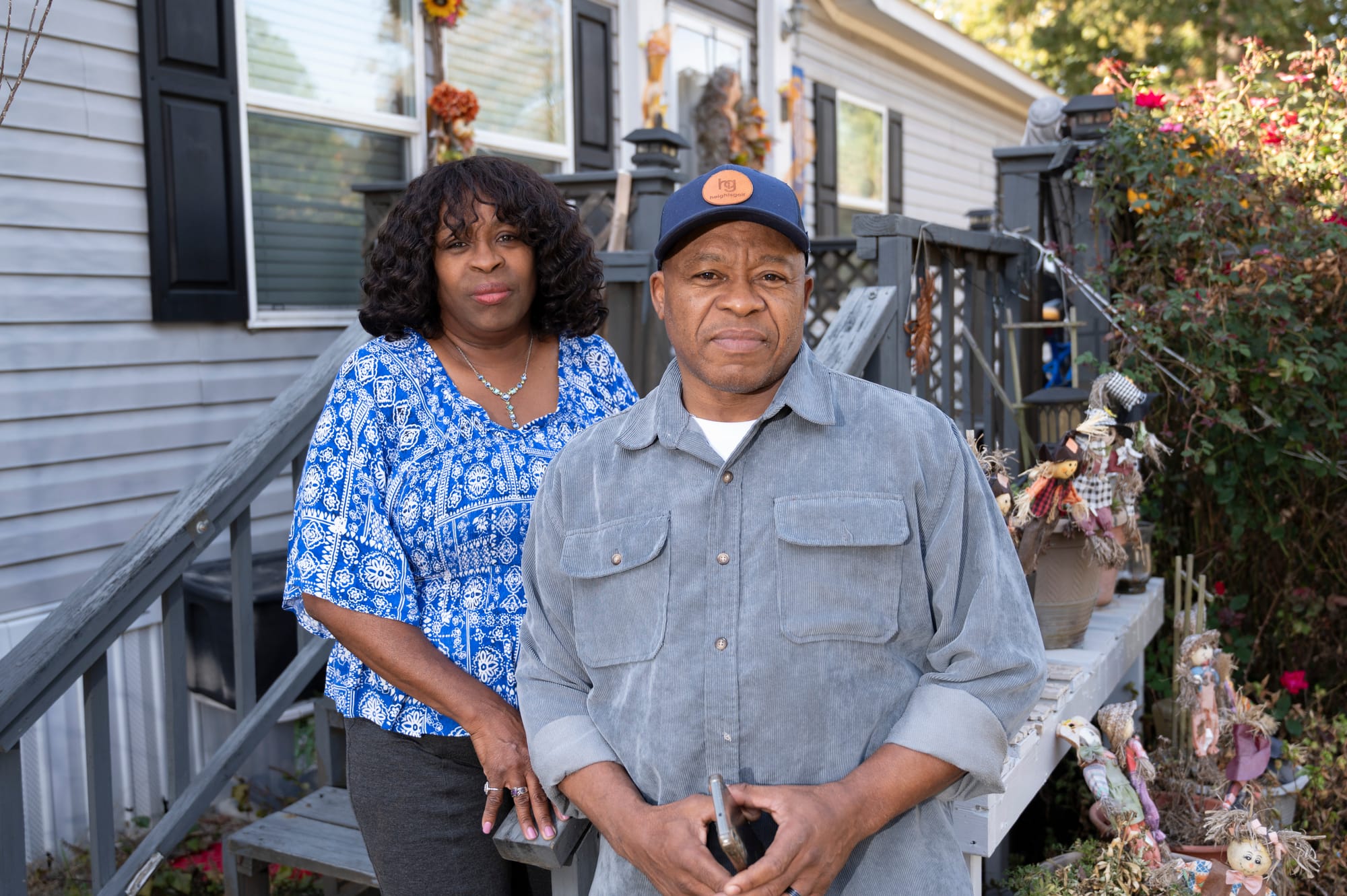
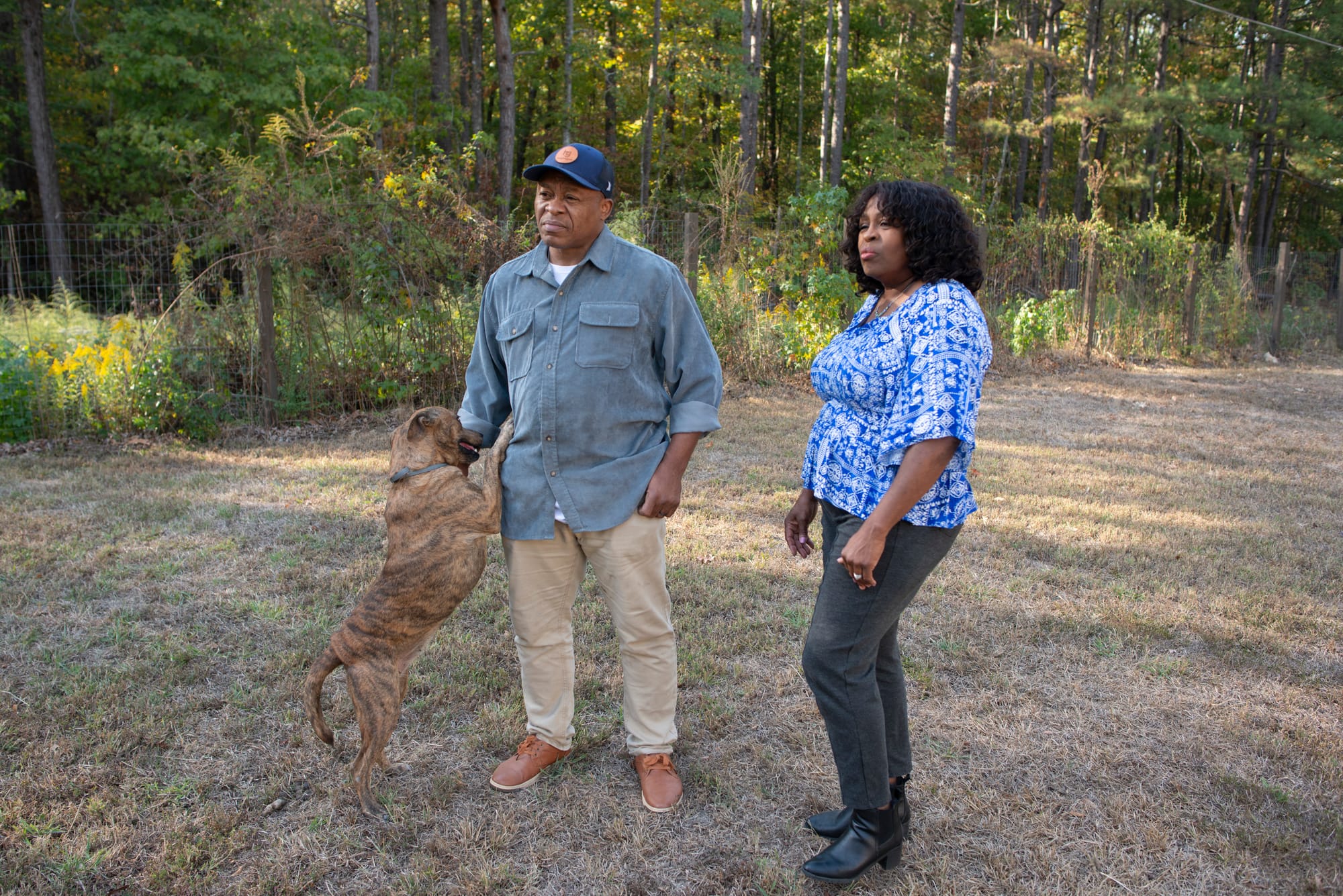
Starting early each morning, logging trucks thunder past Amber and Andrew Ngundue's tidy country home in southeast Pulaski County, Arkansas. The procession continues until after dark, hauling away timber from the vast woods behind their home, a rural bottomland forest resplendent with streams and wildlife — and once listed among the most ecologically significant spots in central Arkansas.
Amber Ngundue moved to this community, 15 minutes south of Little Rock and just off the once-quiet 145th Street, six years ago seeking a slow pace of life. "I wanted to be in the country because it wasn't industrial around. That's why I moved out here," she said. “We still want that seclusion, the quietness, the calm, the stars at night." But it was vanishing by the day.
An operations manager who oversees meal prep for public schools, Amber Ngundue recalls leaning over the fence and asking the truck drivers what was planned. They said they didn't know.
It wasn't until Oct. 21, two years into planning and when this reporter knocked on the Ngundues’ door, that they found out what was coming: AVAIO Digital, a Connecticut-based tech company, was building a $6 billion data center campus feet from their home.
When completed it will span the equivalent of nearly 600 football fields, draw enough electricity to power more than half of all Arkansas' households, use as much as 1 million gallons of fresh water per day and vanquish their way of life.
"The fact that we were not told in the beginning kind of bothers me because you're in our backyard, literally in our backyard," Amber Ngundue said. "It's like our voices didn't matter."
Like many families around the country, the Ngundues are caught in the crosshairs of a building frenzy in service of the national artificial intelligence boom. Arkansas politicians wooed the AVAIO project to the Ngundues’ backyard, slashing taxes for data centers and pitching the intact forests and wetlands to the tech giants.
Evidence shows that officials in Washington helped AVAIO move through a permitting process without the neighbors ever knowing.
Records obtained through the Freedom of Information Act and interviews with Army Corps of Engineers staff show that Trump administration policies aimed at accelerating artificial intelligence helped to fast-track the AVAIO project and hollow out long-trusted avenues of public review. National security has been invoked to hide project details, while Arkansas' own congressmen privately nudged approvals along.
The data center boom is gathering force as federal wetlands protections are being gutted, and Arkansas state agencies show no appetite to step in. As the Trump administration weighs more environmental rollbacks, the AVAIO project stands to benefit again, offering a case study in how the federal government is helping to push data centers on communities that might not want them.
AVAIO officials say that approval at the county level gives them a greenlight to proceed. But the Army Corps of Engineers said it was still evaluating the property, as of late October — leaving residents with what could be a last-ditch opportunity to challenge the project’s environmental impacts and bring it under the county’s new regulations.
When AVAIO officials first approached the Little Rock District of the Army Corps of Engineers — the federal agency responsible for protecting the nation's waterways — in early 2025, the company faced a long road to federal approval.
The land set aside for the AVAIO Digital data center is a vast expanse of loblolly pines, native oaks and river birch, threaded with streams and wetlands. It stands out on a satellite map, a brooding green swath southeast of downtown Little Rock. To the Ngundues and their neighbors, these woods brimming with wildlife like geese, deer, and rabbits offer a perfect place to hunt or take walks.
But AVAIO's draft plan depicts a landscape transformed into an industrial megasite: The nearly 300-acre first phase of the company's project would include nine hulking buildings — each the size of a Costco — as well as substations, access roads and stormwater basins.
The construction would narrowly sidestep two tributaries of Fish Creek, a winding, chartreuse streak on the eastern border of the property and a main artery of the local watershed. Smaller wetlands and streams would be filled in and built over, including a potentially federally protected wetland, marked “W-03.”
We believe that trusted news is essential to a thriving Mississippi River watershed. As a nonprofit journalism collaborative, we rely on your support to make it happen.
This year we have an opportunity to make every individual contribution go twice as far with NewsMatch. Will you help us bring trustworthy news to communities across the basin?
In a March 6, 2025, email, a Corps project manager responded unequivocally: "After discussing with my boss, a standard permit application will need to be turned in," the staffer wrote.
A standard permit meant the Corps planned to put the company through a time-consuming, rigorous review reserved for projects with potentially significant impacts to waters of the United States. Environmental groups have long used the Corps' onerous reviews to push back on harmful developments.
"Someone has determined that the project is big enough and going to impact the environment enough that they need to go through that standard permitting process," said Rob Lee, an environmental lawyer based in Rogers who has litigated cases related to data centers.
Critically, a standard permit would require AVAIO to notify the public, giving the community — including the Ngundues — a chance to weigh in.
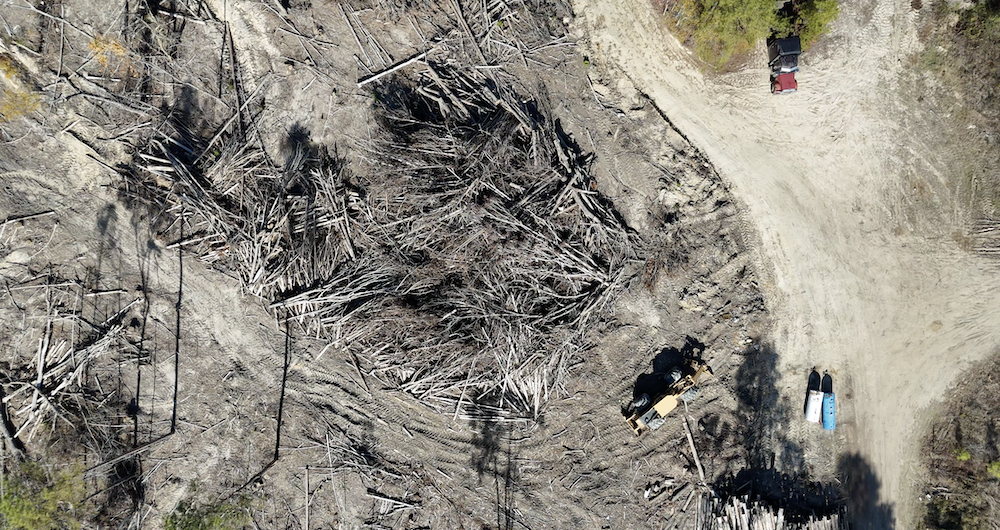
An aerial view of clearcutting underway at AVAIO Digital's planned $6 billion data center in southeast Pulaski County. The first phase of the development will cover nearly 300 acres, with massive server buildings each the size of a Costco, access roads, substations and stormwater basins. The site was once part of an ecologically rich bottomland forest threaded with streams and wetlands. (Brandon Guillot/Unmanned Aerial Solutions of Arkansas)
But the notification never arrived. Instead, the federal permitting landscape shifted in AVAIO's favor.
President Trump issued an executive order in July 2025 directing the Environmental Protection Agency and the head of Army Corps of Engineers to ease permitting requirements under the Clean Water Act, the nation's bedrock water pollution law. The president wanted to lower the permitting hurdles for data center infrastructure, calling a rapid buildout a matter of national security.
So when AVAIO moved ahead with its formal wetlands permit requests in December of that year, those relaxed rules eased the process.
Mentions of a standard permit in correspondence between the company and the Corps were dropped, and W-03 was no longer marked as under federal purview.
The company pursued a “nationwide permit” instead, a speedy approval with no public notification requirement, once reserved only for projects with minimal impacts, like a housing development or restoration project, said Kyla Bennett, a former wetlands permit reviewer at the EPA and the science policy director at the Public Employees for Environmental Responsibility, a nonprofit that protects whistleblowers.
Bennett said AVAIO’s proposal bears little resemblance to the kind of low-impact project the permit was designed to cover. "The nationwide permit is supposed to be minimal impact. This is not going to be a minimal impact to this wetland system," she said. "It's just not."
In January 2026, the Corps modified its rules to explicitly open up nationwide permits to data centers — another sign of the administration's push to accelerate construction. "He's looking for a way to just rubber stamp these approvals," Bennett said of the president.
When AVAIO finally took the project public in January, it ignited an intense public backlash. Elected leaders on the Pulaski County Quorum Court scrambled to put in guardrails, while AVAIO raced to finish up its approvals.
In an April email to the Corps, an environmental consultant at the professional services firm Stantec, working on behalf of AVAIO, reached out noting it was eager to keep the project on time, noting a construction start slated for late May.
That same day, the Corps began invoking Trump’s data center executive order in communications. "Due to this being a data center, there have been discussions about this project internally," a Corps staffer wrote to Stantec.
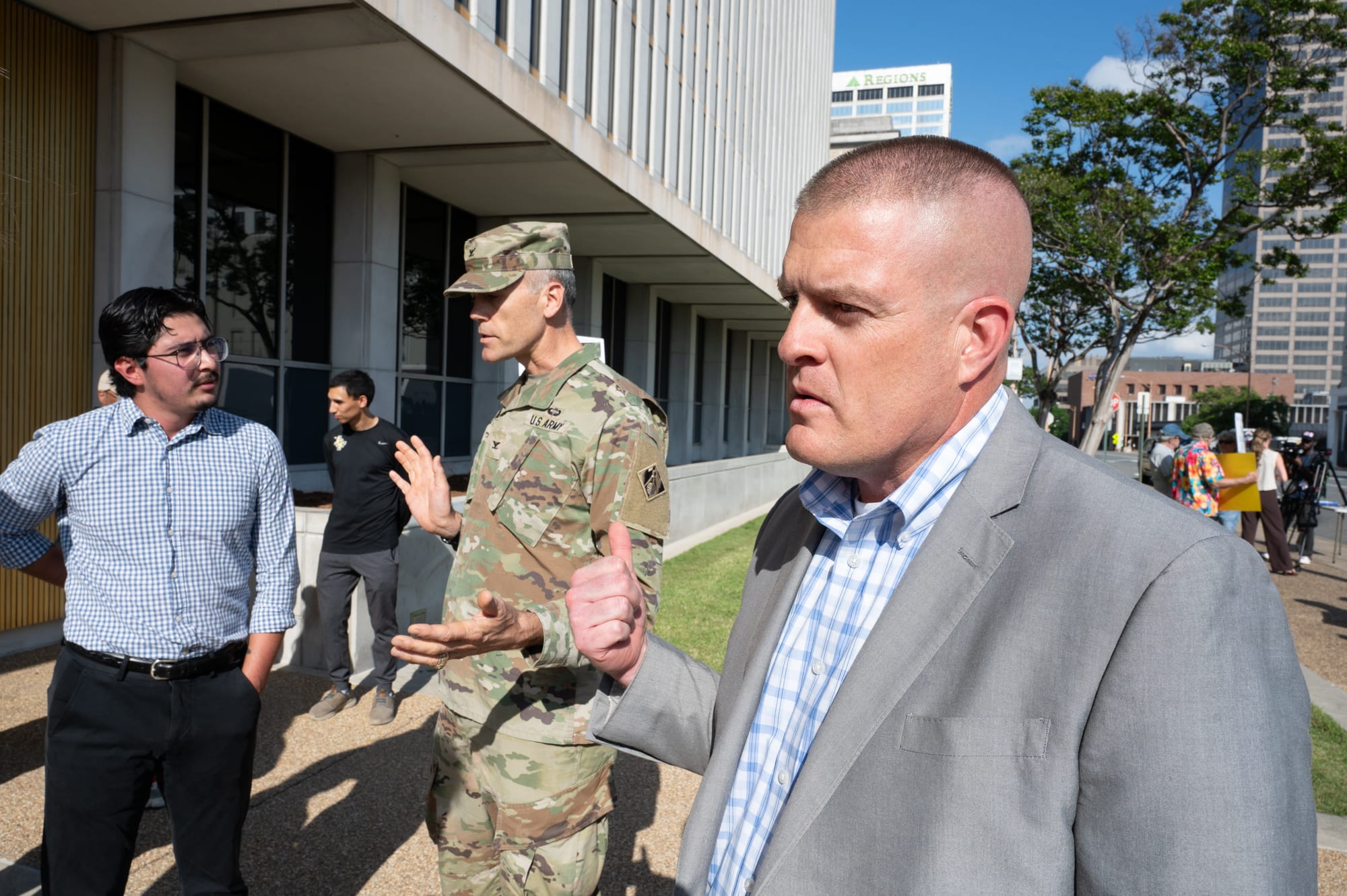
The Corps pushed AVAIO and other data center projects to the front of its queue, the agency confirmed in an interview with the Arkansas Times.
"We used to always do chronological order of when the projects came in, but now we have to make that priority," said Emily Edwards, a regulatory division project manager. "We have 40 projects, and it goes to number one or two."
The executive order surfaced again in July, this time to shield information about AVAIO's progress. A Corps spokesperson would not answer the Arkansas Times’ questions about where AVAIO stood in the permitting process, writing, "National Security concerns and sensitive business operations preclude us releasing anything at this stage."
Lee, the environmental lawyer, said the Corps has a pattern of using national security concerns to conceal details about controversial infrastructure projects from the public. What was once a tactic used for controversial oil pipelines is now being leveraged for data centers, he said. "It's attempting to pull every string possible to shield information from the public and to try to ram these things through before the public has time to understand what's happening.”
Members of Arkansas' congressional delegation jumped in. U.S. Sen. John Boozman's office asked the Corps’ about the project timeline.
A week later, U.S. Sen. Tom Cotton's office contacted the Corps, saying AVAIO was asking questions about its outstanding permit. “What is your expected timeline for final action?" the email said. Cotton has backed Trump's data center efforts, framing them as a matter of national security and suggesting that the Chinese Communist Party is driving negative public views of data centers.
AVAIO now claims it had secured all necessary approvals by early August. But the Army Corps of Engineers says its federal permitting review remains unresolved. Meanwhile, residents are left wondering whether anyone can stop the project.
The low-lying bottomland in southeastern Pulaski County where AVAIO hopes to build has long been home to a working-class, majority Black community, many with roots in the area dating back generations. Historically prone to flooding, the land is cheap but ecologically rich.
Like the Ngundues, India Jackson's family owns land right across from AVAIO's project site, a large wooded plot where neighbors come to hunt beaver and deer and to drop a line in their fishing hole. Jackson doesn't remember the last time she bought fish in a store. "They have made us the sacrificial lamb for economic growth. This is a problem for our way of life considering most people in our area farm, fish and hunt," Jackson said.
Jackson found out about the project in the spring, months after it was made public. She began knocking on doors along 145th Street, encouraging her neighbors to attend the Quorum Court meetings.
Before AVAIO's arrival, residents of south Pulaski County had been clear with planners: They wanted to preserve the place they call home. Last year, the Quorum Court approved a land-use study to help guide development. In it, residents shared wishes for grocery stores and better roads but wanted to protect the rural landscape — and keep industry out.
Some staffers within state agencies were concerned about the development, too. The AVAIO site is smack in the middle of the Lorance Creek Focal Area, a designation by the Arkansas Natural Heritage Commission that refers to regions brimming with unique plant and animal life. The Lorance Creek Natural Area, two miles downstream of the project site, is home to a cypress-tupelo swamp that's a magnet for biologists, school field trips and wildlife enthusiasts, who come to enjoy its 600 plants and 125 bird species.
Just last year, a transportation study by Metroplan and steered by county and city officials recognized the ecological value of the landscape and recommended local planners tread carefully as they weighed more growth.
Internal emails show that staffers at the Natural Heritage Commission are apprehensive about development to the area. In January, the commission's environmental review coordinator, Cindy Osborne, wrote a public letter to the state utility regulatory body, raising concerns about planned transmission lines built to serve AVAIO and that would cut through the Fish Creek watershed, part of the wider Lorance Creek watershed.
"We are aware of other large developments in the vicinity of Lorance Creek Natural Area. We are concerned that the cumulative impacts of these projects would adversely impact both the unique natural resources present and the water supply on which they depend," Osborne wrote.
That same month, Osborne wrote in an email to a colleague that the Lorance Creek watershed “is environmentally significant," and has been on the commission's radar as an area where it hoped to buy up land and do more conservation work.

Yet the Arkansas Natural Heritage Commission agency declined an interview about the AVAIO project's environmental impacts on the focal area. After requesting a list of questions in advance, they responded that they would not proceed with an interview.
A director from the Arkansas Department of Parks, Heritage and Tourism, the umbrella organization that oversees all parks and cultural sites in the state, instead supplied this statement: “ADPHT is committed to protecting Arkansas’ outdoor spaces while also promoting the economic development that our state needs, and we look forward to future discussion about this project," Marty Ryall wrote.
In July, Jackson finally came face-to-face with AVAIO Digital executives, at a tense meeting at a gymnasium in neighboring Wrightsville. "Y'all are building right next to my home and right next to my property line," Jackson told AVAIO executive John Malone. "No one wants to live right next to you."
Malone told her the data center’s design would minimize the impact on neighbors. His colleague, Tom Nesel, said the building's site design intentionally sidestepped the wetlands on the parcel.
Just a few years ago, AVAIO would have faced a very different permitting landscape. While the company is building around larger waterways on the property, it's building on top of a network of seasonal and rainfed streams and small wetlands that likely once enjoyed federal protection.
The project is taking shape amidst historic rollbacks to the Clean Water Act, the country's bedrock water pollution law, that are making it easier for data centers to advance. The year before AVAIO surveyed its site in southeast Pulaski County, the Supreme Court ruled in Sackett v. EPA in favor of sharply curtailing federal protections for wetlands. And since then, the Trump administration has moved to further shrink the waters the government protects.
"Under the current administration, they have taken an extreme view and are looking to extremely narrowly interpret which waters are waters of the United States," said Charles Lane, a former aquatic research scientist at the EPA whose office was eliminated by the Trump administration.
Wetland W-03 shows how these changes are playing out on the ground. A patchy squiggle about the length of a football field, it connects to other rainfed streams that eventually tump into Fish Creek.
In a 2024 environmental assessment, AVAIO's consultants identified W-03 as a potentially federally protected wetland — but later plans show that designation removed. A possible explanation: In March 2025, the Corps and the EPA started the process of narrowing what wetlands and streams it oversees.
What sounds like a persnickety argument over a swampy patch of land points at a nationwide battle over water pollution standards. Even small waterways play a large role in the wider watershed, preventing flooding and providing habitat for animals.
We’re a nonprofit, and this season funds our reporting all year. Right now, NewsMatch doubles every dollar readers give.
Support from readers like you makes it possible for us to keep reporting stories on farming, food, water, climate, data centers and other essential topics. And it helps us ensure those stories reach millions of people across the Mississippi River Basin.
Will you help us reach our goal of $6,500?
Often called the kidneys of the Earth, wetlands also absorb water and clear out toxins. "Water quality has definitely suffered because every time you fill a wetland, you are removing some of the functions of those kidneys, if you will, from cleaning the water before it reaches an actual surface water,” Bennett said.
And yet many states, including Arkansas, have failed to fill the regulatory void with wetlands protections of their own. Data centers are reaping the benefits. A 2026 POLITICO investigation identified 27 data center projects around the country on waterways no longer requiring federal permits.
"It's death by 1,000 cuts," said Lee, the environmental lawyer. "Fill in a little wetland here and over here and over here … without thinking about the long-term impacts of those actions not just for one project but for all projects cumulatively."
A still-unresolved Clean Water Act permit may offer a last-ditch opportunity to challenge AVAIO's plans — or temper its harm to the landscape.
The Pulaski County Quorum Court passed regulations in late October that include much of what the community has asked for — advance public notification and a permit process that factors in the project's impacts on water, land and the surrounding community. AVAIO Digital sued the county days later in federal court. The case is pending.
In the suit, the company argues that it had final county approvals and thus is exempt from new regulations. Tab Townsell, Pulaski County’s interim planning director who personally signed off on the company's plans, said he believes AVAIO had secured all necessary approvals before the new regulations took effect. But those approvals, according to a checklist shared by Townsell, include Corps wetlands permits.
Yet in late October — more than a month after the company and county planners say all approvals were secured — the Corps said it had neither issued a permit nor completed its determination of which wetlands and streams on the property fall under federal jurisdiction. "We're still in the evaluation phase," said Sarah Chitwood, the staff regulatory affairs chief, on Oct. 29, the same day the lawsuit was filed.
The agency also said the company had not finalized its site design at the time and was pursuing culverts, not bridges, contradicting the planning department's claims. “They haven't said whether they want to go this way or that way,” Edwards said.
As of Nov. 21, the Corps has not issued a final wetlands determination, according to its website, raising questions about AVAIO's legal claims and whether the company has satisfied the county's approval requirements.
AVAIO Digital did not respond to requests for comment.
With the outcome of the lawsuit up in the air, those living on the edge of the AVAIO site are in limbo and watching their way of life slip away.
Jackson said the dust from the logging trucks is so thick it's hard to drive. But it's the water impacts once the data center starts up that worry her most.
AVAIO's first two buildings out of a total of 15 planned could consume as much as 1 million gallons of fresh water per day. “We're acting like water is something that we could just go get at a store," she said.
The company has shared plans to release its coolant wastewater on-site, which research shows can disrupt ecosystems. “Once all this stuff goes down, how will it affect their homesteads? How will it affect their farms, their well water?” Jackson asked.
The Environmental Protection Network, a group of former EPA scientists and researchers, recently warned that increased damage to wetlands and seasonal streams could push costs on taxpayers to pay more for flood management and water treatment that wetlands do for free.
"When you lose those systems, you lose all the benefits that they provide for flood water mitigation, flood hazard mitigation, drought mitigation, water quality," Lane, the former EPA scientist who is now an independent researcher and fellow at EPN, said. "I think it's going to end up costing people a lot of money in the in the long run."
From their backyard, the Ngundues can see the once verdant woods behind their home turning into a desolate landscape of splintered stumps. The barred owls that once sat outside their kitchen window are gone. Coyotes are roaming the area and possums are coming up on their porch, looking for food, stirring up their dog, Nala. They're looking to move.
Andrew Ngundue, a data technician, had been reading about Elon Musk's Colossus data center in Memphis. He knew about the constant noise, the air pollution from methane gas turbines. He fretted they'd be forced to move for little money, while his wife worried what it meant for quietude and fresh air.
Recently, the Ngundues were driving around and noticed an enormous new gas station outside of Little Rock — a colossus of steel plonked out by the interstate. Amber Ngundue wondered why the AVAIO data center wasn't put out there, by a noisy, polluted roadway, if it had to go somewhere.
"Why do it here? That's the thought that runs through my mind," she said.
When asked why the planning department approved a data center seemingly against residents' wishes, Townsell, the planning director, said it had to go somewhere. "There needs to be some place in the county … for larger industries that provide the jobs necessary to sustain the economy," he said. AVAIO Digital says it will hire 70 people permanently in its first phase.
Why not put it on the wealthier side of town? Because the land was cheap.
Additional reporting by Phillip Powell of the Arkansas Times.


More than three-quarters of member cities in a Mississippi River coalition have been approached to host AI infrastructure.


The tech giant promises Ridgeland, Mississippi, its massive data center won’t strain water supplies. But an exclusive look at their agreement shows there are few guarantees.


The Midwest has more than 600 data centers, with hundreds in development. Light pollution rules would protect migrating birds and nighttime pollinators.

Private consultants connect local governments with companies looking to build data centers. They’re often paid by taxpayers, but residents are out of the loop on how these groups work.
Environment and agriculture news from across the Mississippi River Basin — delivered straight to your inbox.