

Researchers, patients optimistic in fight against alpha-gal syndrome
A support group and a lab in the St. Louis area provide resources for people with the allergy to mammal products — and evidence that its effects can be reversed.
A support group and a lab in the St. Louis area provide resources for people with the allergy to mammal products — and evidence that its effects can be reversed.

The Gulf’s Flower Garden Banks has been viewed as healthy, but a new study shows signs of damage.

More than three-quarters of member cities in a Mississippi River coalition have been approached to host AI infrastructure.

An Eastern perspective on farm runoff


Take a tiny survey (now with working link!) to help improve this newsletter. Thanks!
Our whole team is hard at work finalizing a big series — in the works practically since the Desk’s inception — about agricultural runoff in the Mississippi River basin.
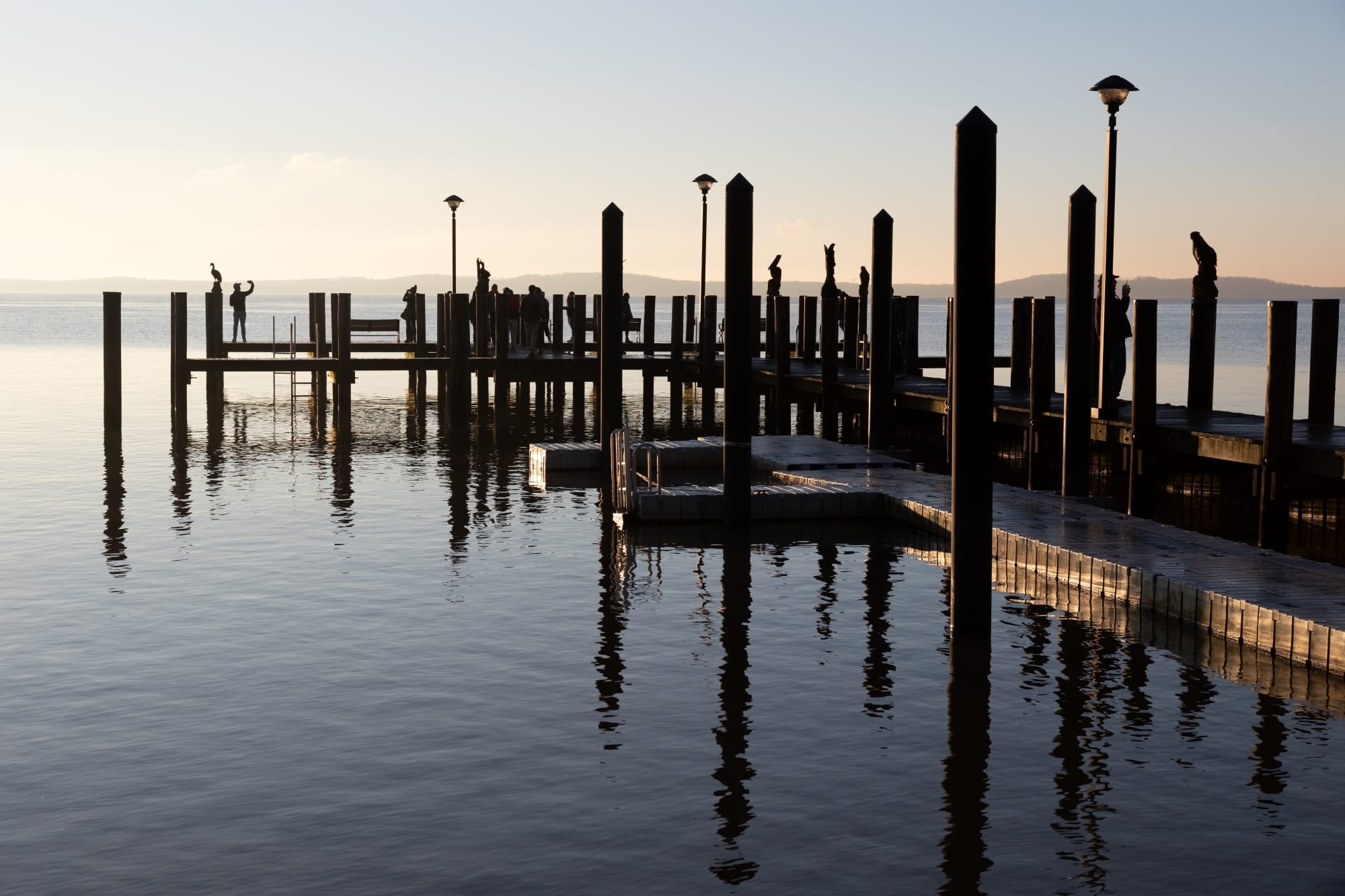
A visit to Maryland’s Chesapeake Bay during the annual Society of Environmental Journalists conference in Philadelphia earlier this month will help shape this project.
“I think it’s really easy and natural for reporters to get wrapped up in the local issues around them. So having the chance to see another watershed in the Chesapeake was very intriguing to me,” said Desk reporter Eric Schmid of St. Louis Public Radio. “They experience some of the same fundamental challenges that we do in the Mississippi River Basin, but they look and feel different for so many reasons: geography, industry (like what is grown or farmed there), politics, regulation and so many others.
Eric said it was hard to relate the Mississippi and Chesapeake watersheds in the moment as he drove through the landscape of rural Maryland and Pennsylvania.
“But this trip proved invaluable once I returned and I had interviews with farmers in Illinois on issues of nutrient runoff,” he said. “My experience on the tour helped me ask better questions because I had seen what other governments, nonprofits, farmers, industry and others were doing to try and address the nutrient issue.”
Plus, he said, the tour was a chance to practice his on-record questions ahead of time.
We’re thrilled to provide these field training opportunities for our journalists as part of our partnership with SEJ. And as our resident Marylander, I’m personally extra excited to see what the team learned about the beautiful Chesapeake in our upcoming runoff project. Look for the first of those stories in early June.
Thanks for reading (and happy Earth Week!),
Annie Ropeik
Ag & Water Desk assistant director
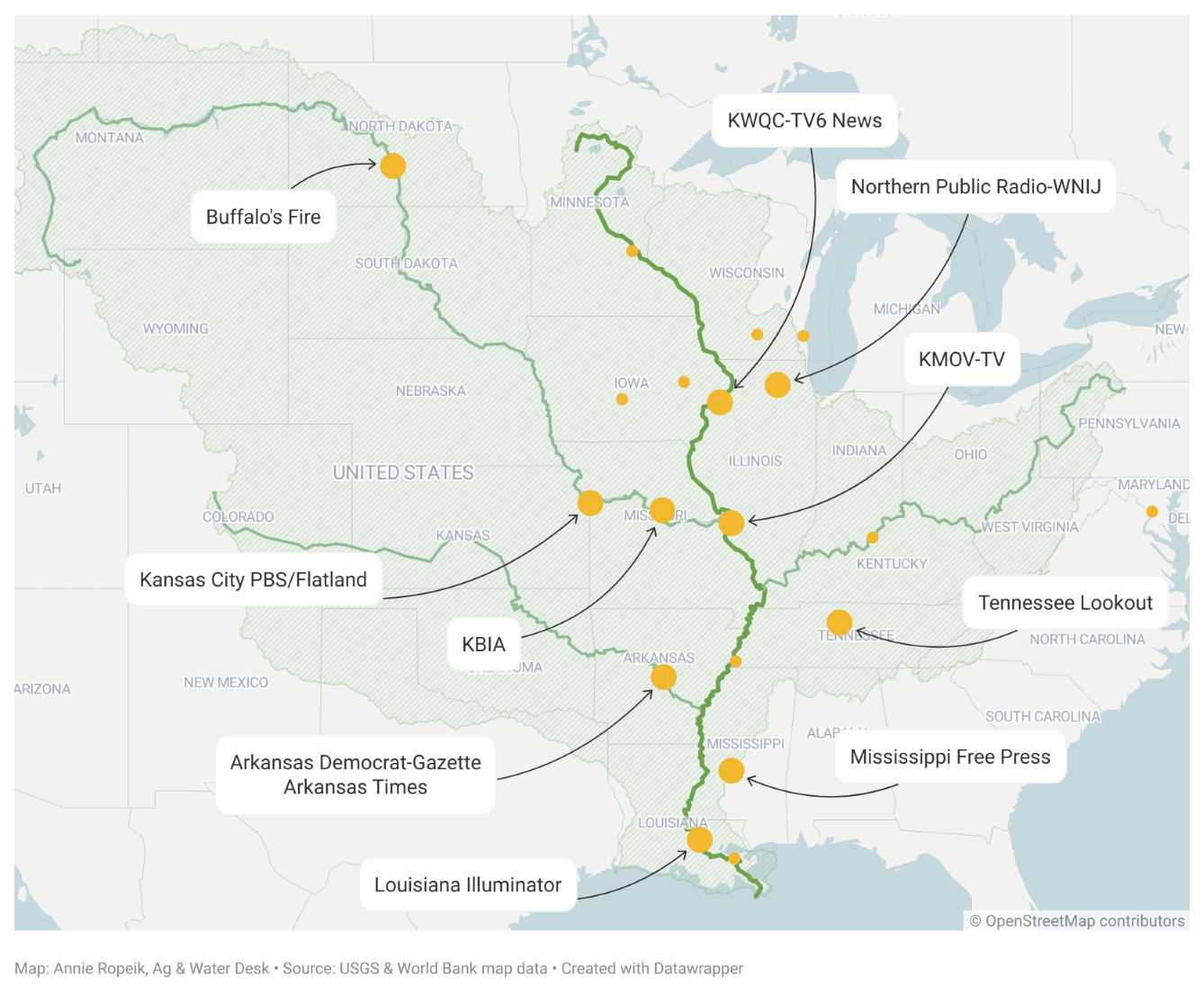
Report for America will announce its 2024 corps members this week, including 11 journalists who will join the Ag & Water Desk team from local newsrooms around the basin!
Read up on our incoming newsrooms here (and on this map), and stay tuned to our website and social media to meet our new reporters. We’ll introduce them in this newsletter next week.
🌎 For Earth Day, the Star Tribune team covers the best things you can do to reduce your own carbon footprint, and why that matters in the big picture:
Get an energy audit and seal up your drafty home’s air leaks, reports our Chloe Johnson. She also has a renter’s guide to cutting emissions.
The series also includes advice on heat pumps, clothing donations, public transit in the Twin Cities, backyard gardening, reducing food waste by reorganizing your fridge, benefitting from solar power and whether to buy carbon offsets when you fly.
Three stories from our expert journalist Erin Jordan of The Cedar Rapids Gazette:
Iowa environmental groups — inspired by Minnesota — want the Environmental Protection Agency to protect drinking water from nitrates in agricultural runoff.
The chair of the Federal Trade Commission met with Iowa farmers who want an antitrust investigation into Koch Industries’ plans to buy one of the state’s largest fertilizer companies.
And an investor who bought an Iowa farm in 2022 is suing the Department of Agriculture because he can’t get subsidies if he plants crops in a wetland. The case challenges one of the only remaining federal protections for wetlands after the U.S. Supreme Court decision in Sackett vs. EPA (read our past coverage here and here).
This story from our Missouri School of Journalism student partners and Ag & Water Desk data journalist Jared Whalen is part of an upcoming series on sludge applied to farmland as fertilizer:
The Missouri Department of Natural Resources is struggling to regulate the land application of industrial food waste as permit applications pile up, including at least two where draft permits contained numerous apparent errors, according to our review.
Even more stories from our partner newsrooms:
Minnesota to take the pulse of the Mississippi River, from the headwaters to Iowa border — by Greg Stanley, Star Tribune
What to know about the Mississippi Flyway as spring bird migration begins — by Madeline Heim, Milwaukee Journal Sentinel
An industrial sterilizer linked to elevated cancer risk is moving out, but a Memphis neighborhood still has questions about pollution — by Keely Brewer, The Daily Memphian
Farmers’ long fight for the Right to Repair is getting little traction in John Deere’s home state of Illinois — by Jennifer Bamberg, Investigate Midwest
Biochar, an ancient farming method, is finding new life improving soil and burying carbon — by Kate Grumke, Harvest Public Media
Kayla Nelsen of Great Lakes Echo writes about the Ag & Water Desk’s regional approach to covering watersheds, one focus of our conference event on April 3:
Increasing public knowledge on watersheds is the foundational step to good watershed reporting, said Madeline Heim, an environmental reporter from the Milwaukee Journal Sentinel [and Ag & Water Desk]. Many Wisconsinites are unaware that Wisconsin is part of both the Mississippi River Basin and the Great Lakes-St. Lawrence River Basin.
“If we can bring people in on the most basic level and get them to understand the basin, then we can keep building on that knowledge to unlock interest and further learning,” Heim said. Read more at Great Lakes Echo.
Lead partners:
Newsroom partners: Star Tribune, Milwaukee Journal Sentinel, Louisville Courier Journal, Harvest Public Media, The Lens, Wisconsin Watch, Investigate Midwest, Daily Memphian, The Gazette, DTN/The Progressive Farmer, Inside Climate News, St. Louis Post-Dispatch, St. Louis Public Radio, The Times-Picayune | The New Orleans Advocate, WWNO-New Orleans Public Radio and University of Missouri affiliates.
This weekly newsletter is compiled by Ag & Water Desk assistant director Annie Ropeik.

Desk reporters dig deep into pollution, drought and AI


The Desk's editorial director reflects on the importance of observing nature

Reflections on our assistant editorial director's first month on the job.

Environment and agriculture news from across the Mississippi River Basin — delivered straight to your inbox.