

Researchers, patients optimistic in fight against alpha-gal syndrome
A support group and a lab in the St. Louis area provide resources for people with the allergy to mammal products — and evidence that its effects can be reversed.
A support group and a lab in the St. Louis area provide resources for people with the allergy to mammal products — and evidence that its effects can be reversed.

The Gulf’s Flower Garden Banks has been viewed as healthy, but a new study shows signs of damage.

More than three-quarters of member cities in a Mississippi River coalition have been approached to host AI infrastructure.

The Desk's editorial director reflects on the importance of observing nature


We all love a good animal story. Readers often tell us that — in surveys and directly.
At the Desk, we tend to think of big issues: climate change, the economic health of farmers, government policy and its ramifications. So it would be easy for us to forget to look at what’s happening in the natural world just outside our windows, in the forests, fields and wetlands of the basin. But when we do, we always uncover something about our relationship to nature.
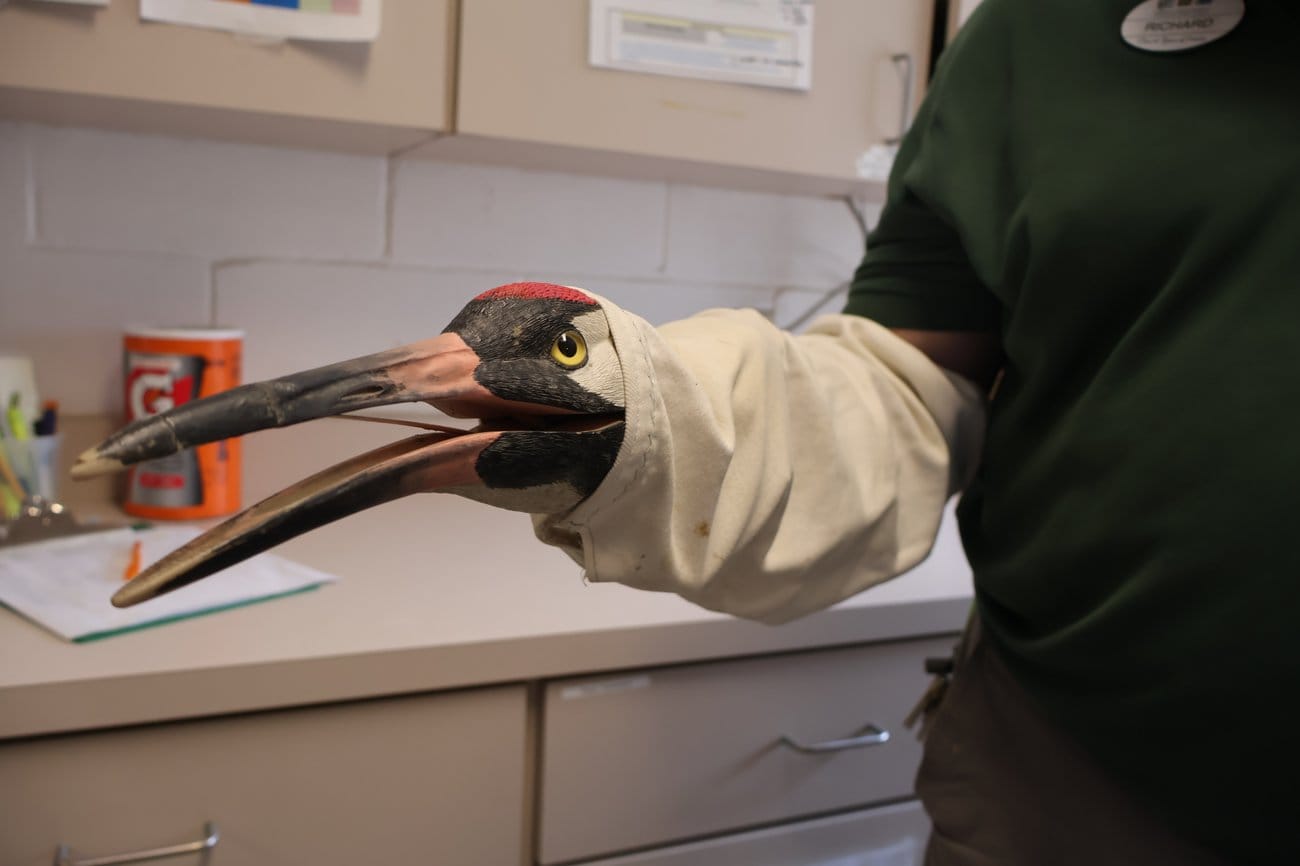
In recent weeks, we’ve shared a pair of stories that centered animals. In mid-August, Elise Plunk of the Louisiana Illuminator filed a report from the Freeport-McMoRan Audubon Species Survival Center on the outskirts of New Orleans. The center is one of the few places breeding whooping cranes, one of North America’s rarest birds.
Elise gave us an inside look at how this work is done, with her beautiful photography helping to tell the story. (Handheld puppets are involved!) And she set out the stakes of the work. Here is how she put it:
Louisiana wildlife officials hope that by raising birds in captivity with the goal of releasing them in the wild, they can establish a self-sustaining population where they once lived naturally in the wetlands.
So far, the program has seen success. The cranes’ advocates say a Trump administration shake-up of habitat protections for endangered species would be widely detrimental to the birds, but they also wonder whether Louisiana’s reintroduction program, unique environment and culture could ensure the cranes are shielded from the worst effects.
But the story is not always one of habitat destruction and species eking out survival. Just a bit farther north in the basin, there is the story of the black bear, which the Tennessee Lookout’s Cassandra Stephenson reports is on the rebound.
Black bears are even showing up in West Tennessee, far from the Smokies, much to the shock of locals. But, as Cassandra writes,
One of the biggest misconceptions about black bears is that they are a mountain species.
They’re really “generalists” that can survive — and thrive — in a variety of ecosystems, including swamps and wetlands. In Tennessee, European settlement and hunting pushed bears into the Great Smoky Mountains and the Cherokee National Forest, large areas of conserved land and places that were harder for people to reach. But wetlands are rich, productive ecosystems that make great food sources for black bears.
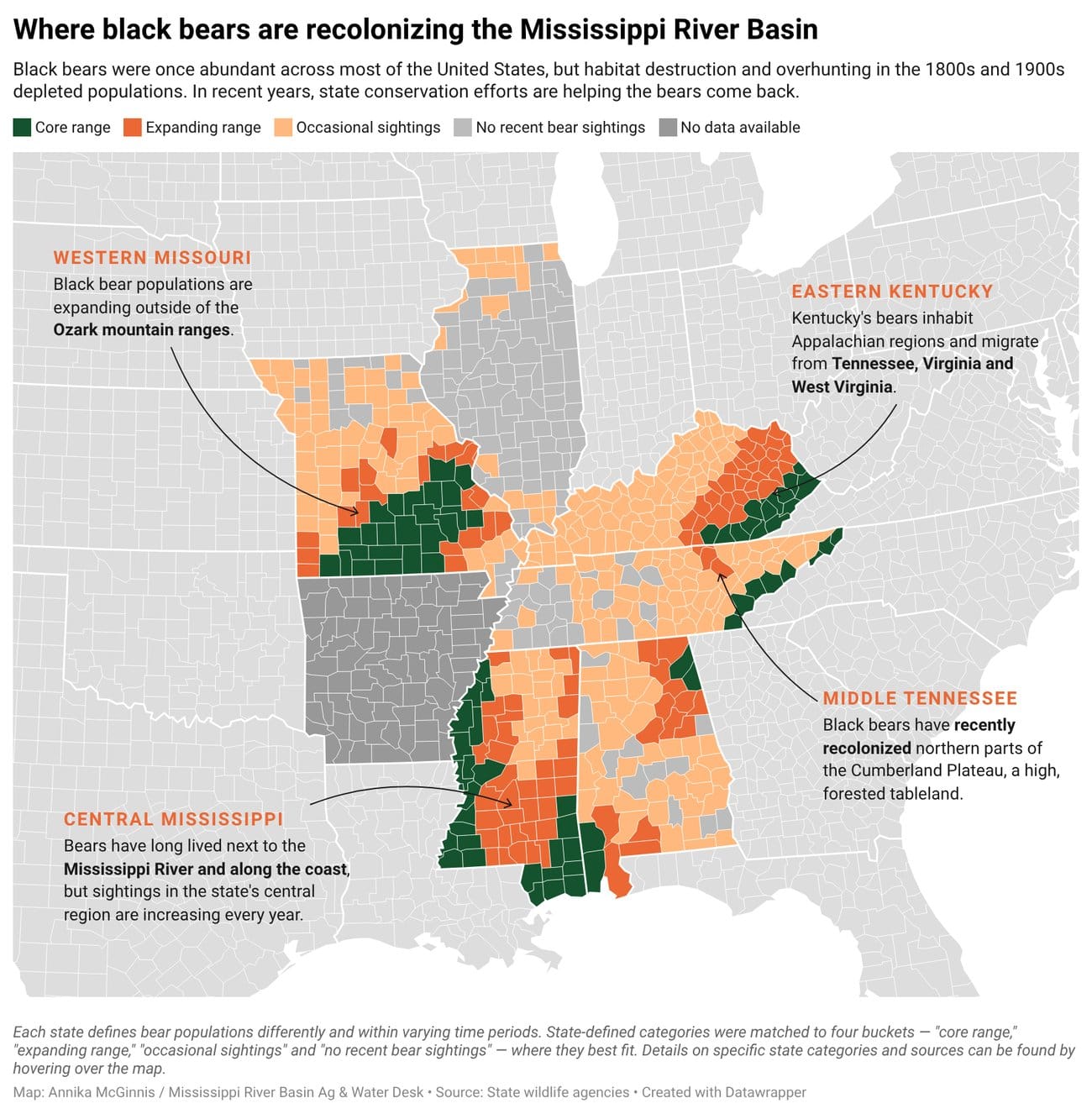
A major contributor to black bears’ resurgence is the tightening of hunting laws, but as with whooping cranes, protection of those wetlands plays a part.
It goes to show you that wetlands matter. And that thoughtful policy choices can make a difference — for us and for the animals that also call the basin home.
Sincerely,
Chas Sisk |  |

Desk reporters dig deep into pollution, drought and AI


Reflections on our assistant editorial director's first month on the job.


We added 6 corps members last month, and they're already learning the beat.
Environment and agriculture news from across the Mississippi River Basin — delivered straight to your inbox.