

Researchers, patients optimistic in fight against alpha-gal syndrome
A support group and a lab in the St. Louis area provide resources for people with the allergy to mammal products — and evidence that its effects can be reversed.
A support group and a lab in the St. Louis area provide resources for people with the allergy to mammal products — and evidence that its effects can be reversed.

The Gulf’s Flower Garden Banks has been viewed as healthy, but a new study shows signs of damage.

More than three-quarters of member cities in a Mississippi River coalition have been approached to host AI infrastructure.


The Environmental Protection Agency is monitoring 23 communities across the country for newly identified cancer risks associated with a chemical emission from commercial sterilizers.
The agency’s analysis focuses on ethylene oxide, or EtO, which is used to sterilize about 20 billion medical devices annually, along with some food products and spices. The gas is also used in products like antifreeze, textiles, plastics, detergents and adhesives.
The EPA identified sterilizer facilities as sources of potentially risky levels of the chemical in the Midwest, South and on the East Coast, as well as in Puerto Rico. Affected communities include Memphis and New Tazewell, Tennessee; Columbus, Nebraska; Ardmore, Oklahoma; and Lakewood, Colorado.
The EPA found that a risk of at least 100 additional cancer cases per million people in these communities was associated with “lifetime” exposure to EtO – meaning exposure in the air, all day, every day for 70 years.
The agency concluded that EtO is carcinogenic to humans through inhalation, and can also damage the brain and nervous system and irritate the eyes, skin, nose, throat and lungs. They said workers in factories that use EtO and people who live near those facilities have the highest risk of exposure.
The National Cancer Institute says EtO’s ability to damage DNA makes it a powerful sterilizer but also accounts for its cancer-causing effects.
Globally, exposure to air pollution can vary greatly by socioeconomic status, but people of color experience heightened exposure to air pollution in the U.S. regardless of region or income. Historically underserved communities that live near EtO emitters are potentially most at risk, according to the EPA.
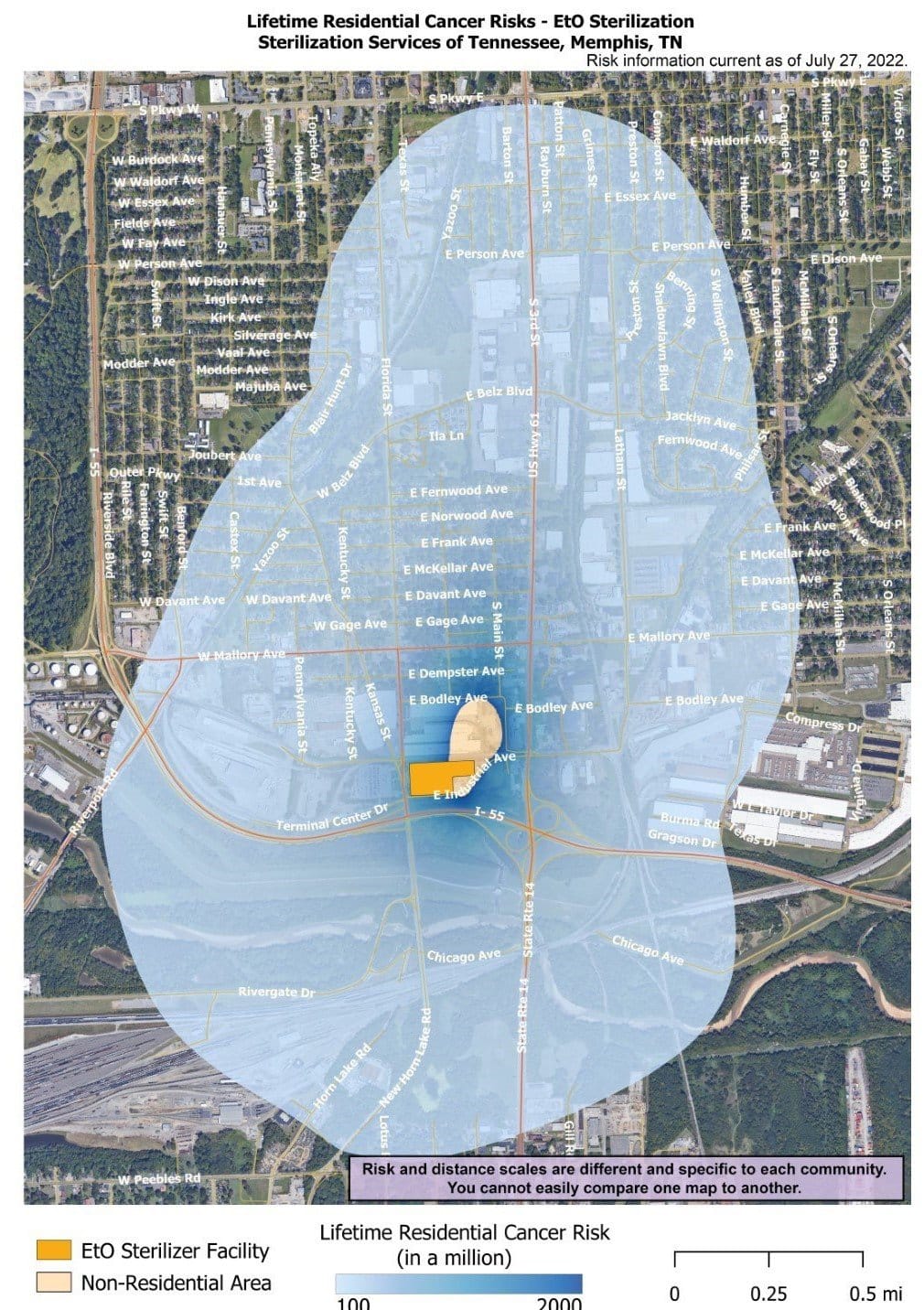
One such community is in Southwest Memphis, home to a 46-year-old facility called Sterilization Services of Tennessee, which declined to comment when reached by phone Thursday.
The company is subject to current EPA regulations, but these do not account for the new cancer analysis. Within the immediate area around the Memphis facility, the EPA found a risk of 2,000 additional cancer cases in 1 million — or 20 cases per 10,000 people.
“I am very concerned about the emissions based on the history of this chemical in other cities,” U.S. Rep. Steve Cohen (D-TN) said in a statement. “It is fortunate that the risk was detected and that federal officials are working to address it.”
Cohen said he is in contact with EPA, as well as Memphis and Shelby County officials, to ensure adequate testing and safety measures are in place.
The EPA aims to develop more protective Clean Air Act standards for EtO emissions and ensure that community members are informed about the results of air sampling.
“Later in 2022, EPA will release additional, national-level information about the risks that EtO creates to those who work in EtO facilities, as well as those who spend time near them,” the agency said in a press release.
The agency will hold a series of public meetings on the issue in the 23 affected communities, as well as a public national webinar on Aug. 18, from 7 to 8:30 p.m. CT. People can find dates for local meetings by clicking on the locations listed in the EPA’s press release.
This story is a product of the Mississippi River Basin Ag & Water Desk, an editorially independent reporting network based at the University of Missouri School of Journalism in partnership with Report For America and funded by the Walton Family Foundation.

Nitrate pollution is especially acute in rural areas and has been linked to disease. More than 80 groups nationwide say immediate action is needed.


Paraquat has been linked to Parkinson’s disease and just a sip is fatal, but tens of thousands of pounds of it are being released in the Mississippi Basin.


There are more than 1,300 active Superfund sites across the country, including nearly 200 on tribal land

Residents of Canton, Miss., say traffic and dust have already made life a ‘mess’. And they worry what will happen when hundreds of backup diesel generators go online.

Environment and agriculture news from across the Mississippi River Basin — delivered straight to your inbox.