

Researchers, patients optimistic in fight against alpha-gal syndrome
A support group and a lab in the St. Louis area provide resources for people with the allergy to mammal products — and evidence that its effects can be reversed.
A support group and a lab in the St. Louis area provide resources for people with the allergy to mammal products — and evidence that its effects can be reversed.

The Gulf’s Flower Garden Banks has been viewed as healthy, but a new study shows signs of damage.

More than three-quarters of member cities in a Mississippi River coalition have been approached to host AI infrastructure.

The roughly 5,500-acre property features wetland forest used for forestry research and a watershed that drains to the Mississippi River


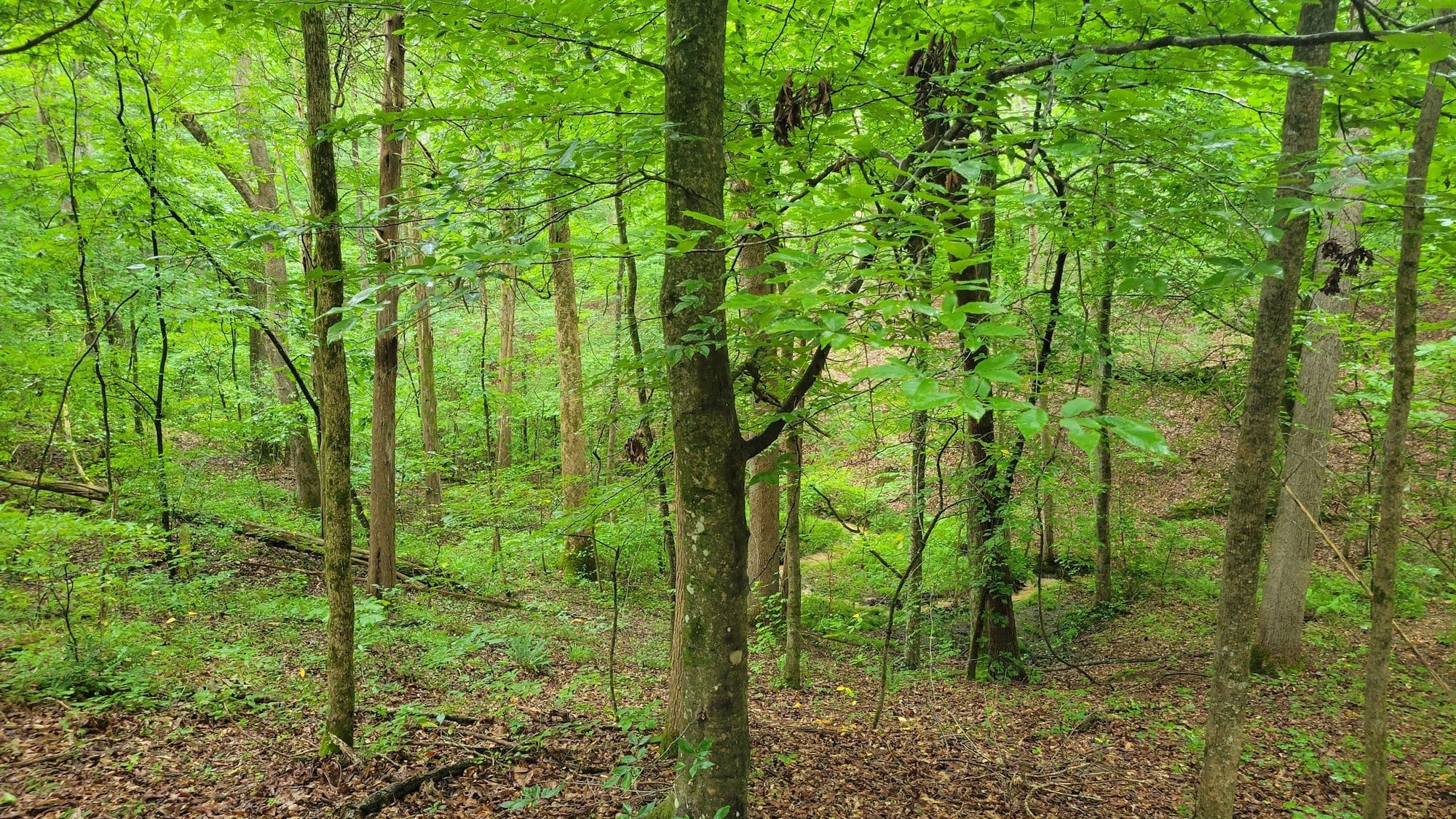
Grand Junction, Tenn. – About 60 miles east of Memphis near the Mississippi line, verdant hardwood trees and ecologically exceptional streams weave through thousands of acres of rolling hills.
The land is home to a diverse array of aquatic and terrestrial life, decades-old archaeological sites and contains a major part of the upper fork of the Wolf River, which flows into the Mississippi River and feeds the aquifer system responsible for Memphis’ water supply.
If all goes to plan, 5,477 acres of this land will soon become Tennessee’s newest state forest, securing its preservation for posterity.
The “outstanding” forest habitat serves several species prioritized by Tennessee for protection, said Zachary Lesch-Huie, Tennessee state director for The Conservation Fund. The national nonprofit conservation group has acted as an intermediary to negotiate the purchase of the land and plans to sign over the contract to the state. There’s potential for future recreational and educational opportunities, including hunting, river access, hiking and continued archeological research on more than 40 historical sites on the property.
The parcel’s preservation could also have implications beyond Tennessee. Good water quality starts at a river’s headwaters, according to Ryan Hall, director of land conservation at the Wolf River Conservancy.
Cooperation between the Wolf River Conservancy, state agencies, and other conservancy partners is key to safeguarding surface and underground water quality and habitat diversity of the Wolf River and its watershed, Hall wrote in an email. But not all of the Mississippi River’s tributary watersheds have conservation partners to champion their preservation. Conservation efforts like this “need to be replicated for all high-quality tributaries to the Mississippi River,” Hall said.
Work toward the purchase was already underway when State Forester Heather Slayton was appointed to her role this January. After calling her staff to inform them of her new title, “my second act was to call the Hobart Ames Foundation to let them know that we were hustling to get this project off the ground,” she said. “In the relative scheme of forest legacy projects, it was breakneck speed.”
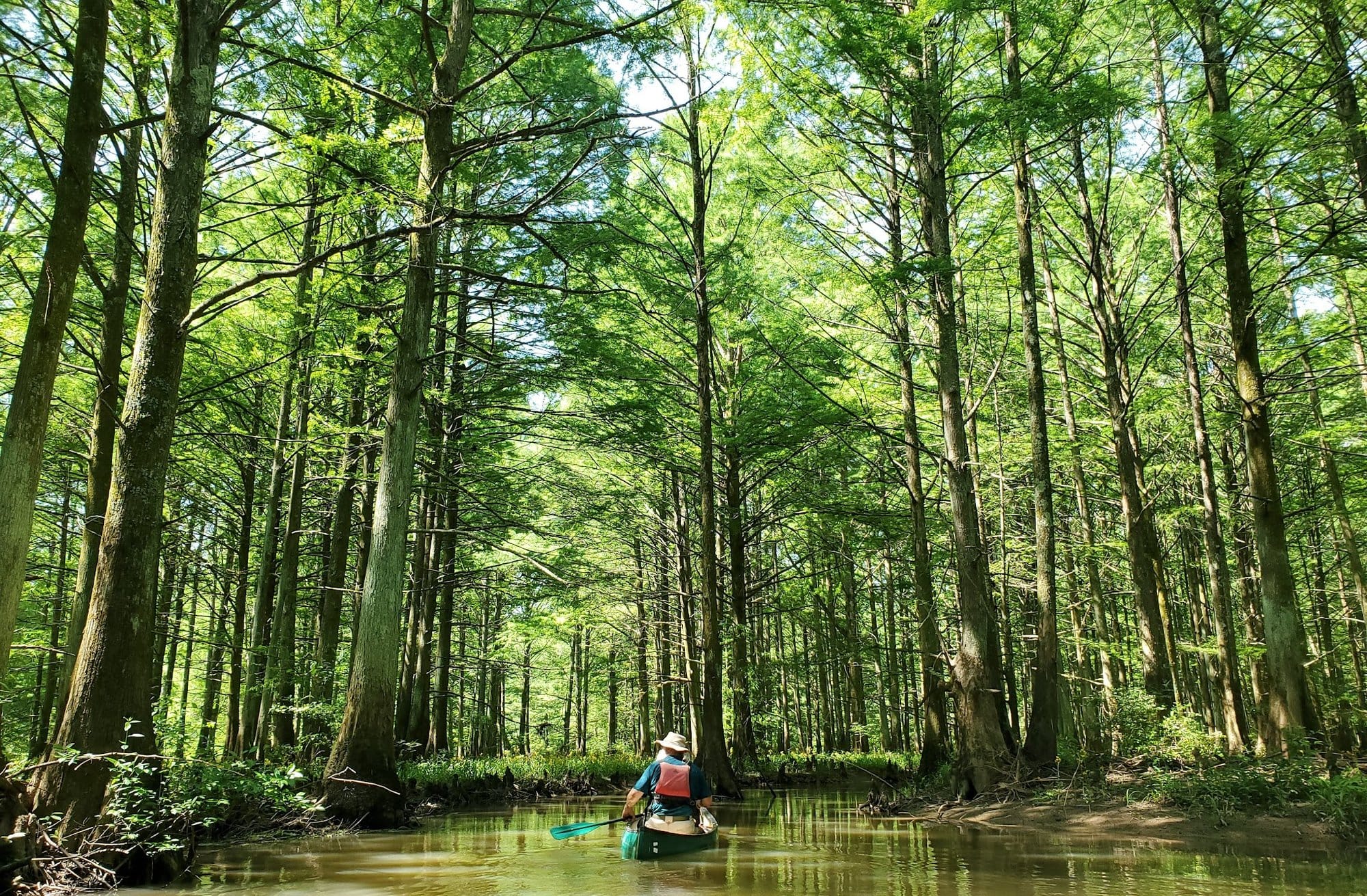
The roughly 5,500-acre forest is a portion of the historic Ames Plantation, an 18,400-acre tract in Tennessee’s Fayette and Hardeman counties owned by the Hobart Ames Foundation. For decades, the foundation has partnered with the University of Tennessee’s AgResearch and Education Center to maintain the land and run multiple research programs in its forests, row crop fields and archaeological sites. The foundation put the 5,500-acre plot on the market around early 2023.
The land was only on the market for a short time before the Hobart Ames Foundation agreed to remove it and allow Tennessee “a little bit of time” to patch together the funds to “keep it protected and conserved in perpetuity,” Slayton said.
News of the project surfaced in August when the state Department of Agriculture brought an approval request to a State Building Commission subcommittee, warning that the land “will be under immediate threat of development if sold to a third party.”
The forest is located near Grand Junction, about 30 miles south of Ford's new BlueOval City electric vehicle manufacturing plant. The 6-square-mile industrial park is expected to draw thousands of new residents to West Tennessee, including areas known for their rural farmland.
“This tract is important and irreplaceable as it maintains the longest continuous research tree nursery in the country. It also contains one of the best examples of long-term, well-managed bottomland hardwood forest in West Tennessee," the request states.
The total worth of the project, including purchase price and additional costs, is around $24.3 million, Slayton said. She said an initial $16.9 million to secure the purchase will come from Tennessee’s Heritage Conservation Trust Fund, in addition to about $1.5 million in state wetland funding and help from other state agencies. Slayton said Tennessee’s Division of Forestry applied to the U.S. Department of Agriculture’s Forest Legacy Program, which helps keep working forests intact. The program would cover 75% of the purchase price, with state funds making up the remaining 25%. If the federal grant is approved, the plan is to repay the Heritage Conservation Trust Fund’s contribution, she said.
The purchase is not yet final — Lesch-Huie said the process is going well but could take several more weeks, barring any unforeseen snags. He said he credits the land’s excellent condition to the stewardship of the Hobart Ames Foundation and the University of Tennessee, and the state's "conservation vision" for making the deal possible.
“I also want to give credit to … the Hobart Ames Foundation, because their willingness to even do this important deal for the State of Tennessee is what this (project) hinges on,” he said. “All these conservation deals rely on a willing landowner, and they are that.”
The University of Tennessee declined to comment on the pending deal, and the Hobart Ames Foundation did not respond to a request for comment.
Once the sale is complete, the University of Tennessee will continue to manage the property alongside the state and continue its tree nursery research project.
"The information that comes out of the research for tree genetics and how to produce healthier, more resilient trees helps the forests of all the rest of the State of Tennessee as well," Slayton said.
The north fork of the Wolf River flows through this portion of bottomland forest — essentially a river swamp or forested wetland — on the Ames property. It meets the Wolf River in Moscow, Tennessee, and the Wolf River then flows into the Mississippi River north of Downtown Memphis.
Memphis is the largest city in the country that relies fully on groundwater, according to the University of Memphis.
Hall said the entire tract of forest land lies within an aquifer recharge zone for the Memphis Sand Aquifer. Rainwater that fills the streams and wetlands slowly filters through the ground and recharges the drinking water source.
“Wetlands are really integral to protecting and providing clean water, so this system helps to do that for about 2.8 million people downstream in the city of Memphis area and the surrounding counties," Slayton said. "So just being able to protect that wetland function of creating clean water for those people is really, really special."
The Wolf River Conservancy aims to preserve the Wolf River watershed as a natural resource and provide conservation education. The organization is working to build a Wolf River Greenway trail through Memphis. The group has acted as supporters and advocates of transforming this land into a new state forest, Hall said.
“(The property) has been stewarded well for a long time, and now we know it’s going to be stewarded well in perpetuity, so that peace of mind is just — the Wolf River Conservancy and all of our volunteers, donors, we’re very grateful that this is happening," he said.
A rich cultural site
The Ames property was one of several large plantations located in the area in the 1800s, Slayton said.
“This particular forest block and the larger Ames property has a very rich cultural history of enslaved people in this part of Tennessee,” she said.
The University of Tennessee, in partnership with the Hobart Ames Foundation, has done extensive research on the property, identifying historical artifacts and tracing ancestors who lived there.
The Ames Plantation is a “laboratory for the study of regional historical and preservation issues,” its website states. “The understanding that we have gained regarding issues of 19th century land ownership, settlement patterns, mortuary practices, the area’s cotton-based economy and slavery can be applied as a model beyond our boundaries.”
The greater Ames property features the Ames Manor, a cabin and the remains of multiple 19th-century buildings, including houses, churches, schools, cotton gins and the quarters of enslaved people, according to the university. There are 26 known cemeteries on the property, including up to six burial grounds for enslaved people, some of which have more than 100 graves.
“That’s another part of this project that’s super exciting: keeping it in public ownership so we can protect the cultural significance of the property,” Slayton said.
This story is a product of the Mississippi River Basin Ag & Water Desk, an independent reporting network based at the University of Missouri in partnership with Report for America, with major funding from the Walton Family Foundation.


The Gulf’s Flower Garden Banks has been viewed as healthy, but a new study shows signs of damage.

At approximately 1,332 square miles, the low oxygen area is the second-smallest in four decades of measurement

The National Oceanic and Atmospheric Administration expects the oxygen-depleted zone to be about the size of the state of New Jersey

A project to divert water away from the Missouri River has sparked a new fight in a decades-long conflict over how to manage the river’s water in times of drought.
Environment and agriculture news from across the Mississippi River Basin — delivered straight to your inbox.
