

Researchers, patients optimistic in fight against alpha-gal syndrome
A support group and a lab in the St. Louis area provide resources for people with the allergy to mammal products — and evidence that its effects can be reversed.
A support group and a lab in the St. Louis area provide resources for people with the allergy to mammal products — and evidence that its effects can be reversed.

The Gulf’s Flower Garden Banks has been viewed as healthy, but a new study shows signs of damage.

More than three-quarters of member cities in a Mississippi River coalition have been approached to host AI infrastructure.


New Madrid, MO — A small earthquake brought tremors across the Tennessee, Kentucky, and Missouri border last weekend, a reminder that much of the Midwest sits on a major faultline called the New Madrid, which saw one of the most destructive earthquakes in history in 1812.
While the quake, near Tiptonville, Tennessee, was just a 2.8 on the Richter scale, local news outlets reported the tremors were felt throughout the region.
There are hundreds of minor quakes along the faultline every year, and it’s only a matter of time before the next big one.
On Thursday, Oct. 17, thousands of people participated in an earthquake preparedness exercise called “the Great ShakeOut,” and practiced survival skills. There’s only so much officials can do to prepare — because they know we can’t prevent earthquakes, all we can do is be ready.
This summer officials held preparation drills across Missouri. Emergency responders practiced for when buildings might collapse, and how to save as many people as possible.
Firefighters and first responders held a drill at Chesterfield Mall in the St. Louis area in July, where they simulated search and rescue missions. The three-day drill scenario simulated an 8.4 magnitude earthquake along the New Madrid Seismic Zone and involved 500 people, including local emergency responders, military responders, hospitals, and volunteers.
It was the first time the St. Louis area hosted the exercises. Last year they were conducted in Nashville.
Matt Wilcox is the assistant fire chief for the Maplewood, Missouri, fire department and a rescue squad and an officer for FEMA Urban Search and Rescue Missouri Task Force 1. He described the exercise, "We were looking through rubble, smashed delivery trucks, to try to locate someone or a sign of life." St. Louis area responders train constantly.
"It's a tough day of work for everybody here,” said Wilcox.
A FEMA study in 2004 found that if the 1812 quakes hit today, which were between 7-8 on the Richter scale, damages could exceed $200 billion. The United States Geological Survey estimates that nationwide, earthquakes cause $14 billion in damages each year.
The Midwest hasn’t seen a major quake recently, though hundreds of minor quakes have been detected so far in 2024.
But things have changed since 1812. The Midwest was rural and open then, 200 years later, it’s much more developed. There are roads, railroads, and many more towns and buildings. The damage could be staggering.
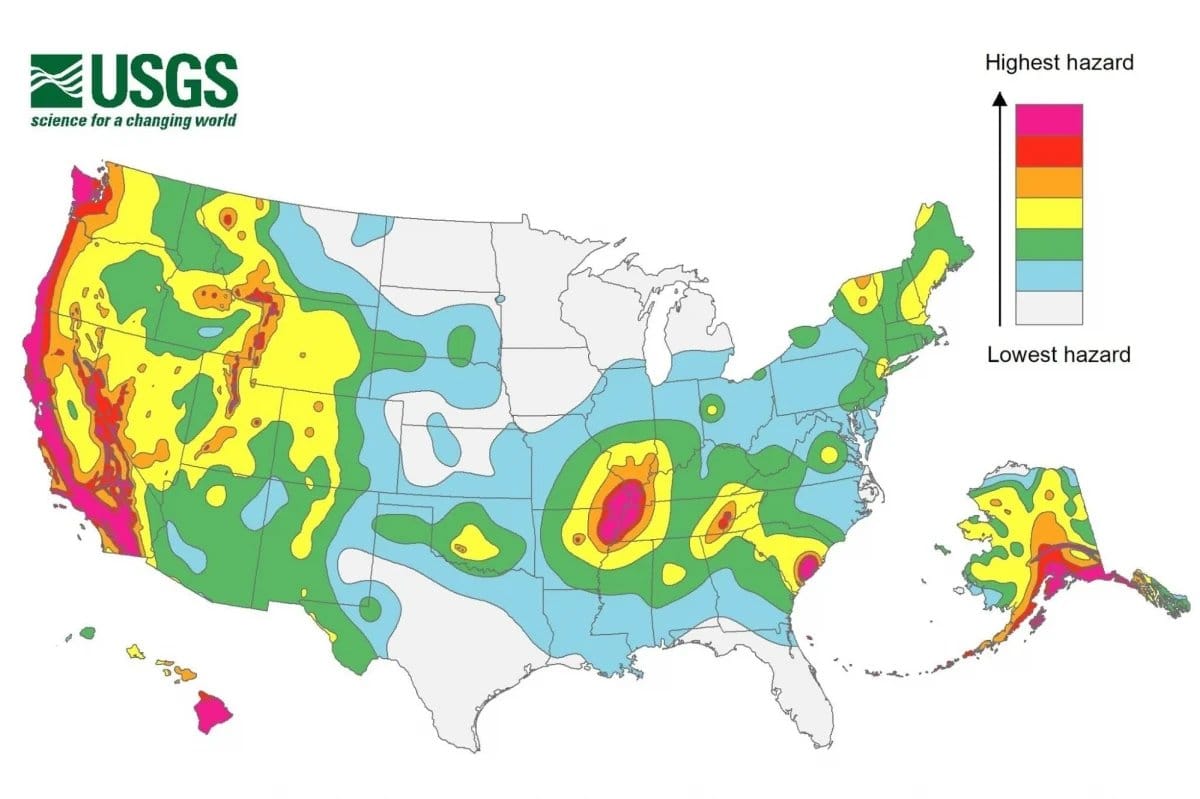
Seismologists believe the real risk comes after the shaking ends.
Pablo Aravena is a PhD student of geophysics at Saint Louis University, which has a whole department dedicated to studying the New Madrid faultline.
“Then you have to start worrying about whether the pipes will break, how long will we have electricity," said Aravena.
Major Kelly Hudson is a project officer for Michigan-based National Guard Task Force 46, which co-led an emergency response training in the St. Louis region this summer.
“When you look at the St. Louis area, especially on the New Madrid seismic fault, one could argue we're due for one of those,” he said.
The biggest concern for officials is critical infrastructure, like roads and bridges. Scientists say that’s why it’s crucial to better understand earthquakes, and build smarter, to prepare.
SLU’s Earthquake Center was created to study risk and better understand earthquakes, which is a challenging science. There’s much scientists still don’t understand.
"Why did we have the earthquake?” said Robert Herrmann, emeritus professor of geophysics at SLU. “What was the nature of the earthquake, and where's the fault?"
Scientists aim to estimate the chance of occurrence, since they can’t exactly predict the likelihood. "We don't know when they're going to happen, and it's not for lack of trying,” said Aravena.
Officials do know that certain buildings are more vulnerable, such as those built on soft soil or near rivers. That’s why the state of Missouri recommends homeowners enroll in earthquake insurance, though rates have plummeted in recent years.
"If a disaster occurs, there will be a response to help people affected – and done quickly,” Hermann said.
Nationwide, the USGS has thousands of computer monitoring stations constantly monitoring seismic activity.
For Aravena, it’s personal. He’s a survivor of the 2010 earthquake in Chile, which was an 8.8 on the Richter scale. “I was on the 7th floor – and I remember – this is very scary."
"One way to beat fear is to understand it,” said Aravena.
In New Madrid, a museum was created to catalog and document the impacts of the series of devastating earthquakes that hit over 200 years ago. It includes the firsthand accounts of several survivors, including Eliza Bryan, a woman who described loud noises, destroyed forests and massive flooding.
“The first steamboat that ever launched on the Mississippi River, the New Orleans… was actually just south of New Madrid when the earthquakes hit,” said Jeff Grunwald, the museum administrator. “Welcome to the Mississippi River, right?”
After the shaking, thousands of trees floated around the Mississippi River. Three days after the quake, sailors passed through the area of New Madrid. “They found that the town of New Madrid had been destroyed,” the city’s website states. “They didn't dare to stop and pick up a few survivors, for fear of being overrun, and they were without supplies.”
Grunwald said the New Orleans was able to continue its journey south, and locals began trying to rebuild. He said that the New Madrid quake marked the first time disaster assistance was offered to citizens by the federal government.
These earthquakes are more than just a footnote in history. Modern seismologists have studied these historic quakes to try to understand the tectonic, human and environmental conditions around these powerful shakes.
It’s not a question of if, but when. Until then, all people can do is prepare. “It's prudent to be worried about them — not afraid of them,” said Hermann. “But take prudent steps to prepare for something in the future."
Many states in the region, which includes southeastern Missouri, northeastern Arkansas, western Tennessee, western Kentucky and southern Illinois, have response plans for commerce, economics and transportation.
"You have to worry about if the road structures are down, the bridges safe – so how do you get the supplies? So you can create a nice scenario for training,” said Hermann.
For individuals, it’s important to know the basics. Get away from windows, protect your head, seek cover, and if you’re outside, stay away from trees and buildings. Learn more at ShakeOut.org.
“Be aware that they can happen,” said Aravena. “But don't live your life like the worst is going to happen everyday."
This story is a product of the Mississippi River Basin Ag & Water Desk, an independent reporting network based at the University of Missouri in partnership with Report for America, with major funding from the Walton Family Foundation. Tegan Wendland contributed to reporting.


A program in Louisiana aims to be a model for endangered species preservation as protections for habitats are scaled back.

We interviewed more than 50 experts to create a community toolkit. It lays out how ordinary people can respond — and how communities can prepare to handle projects beforehand.

About half of grain bin entrapments are still fatal despite advances in safety training and rescue efforts.


The 'farmer-led movement' aims to shape the agricultural landscape — by strengthening soils and building community

Environment and agriculture news from across the Mississippi River Basin — delivered straight to your inbox.